
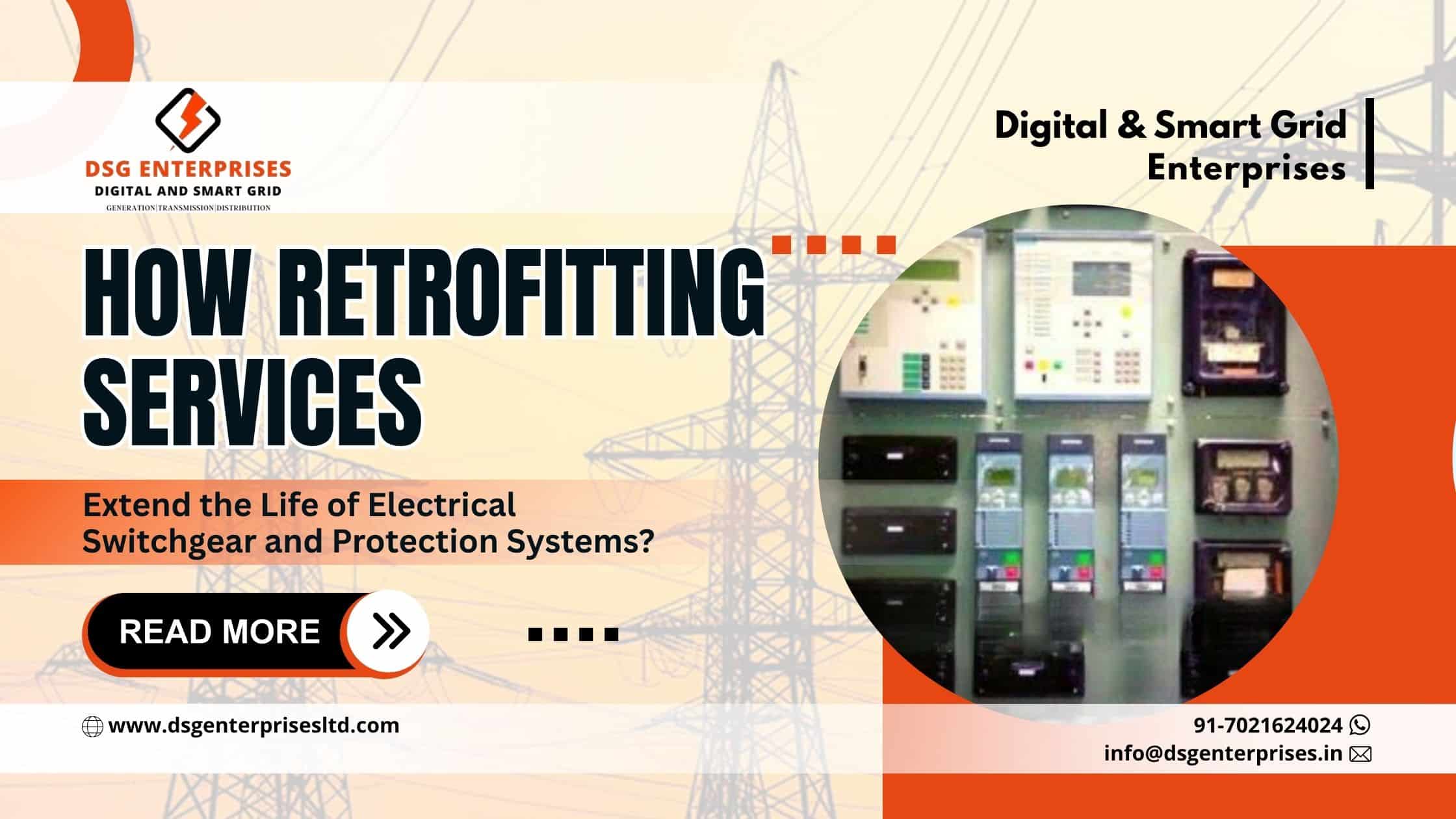
Every plant has that one switchgear panel nobody wants to touch. It has run for 25 or 30 years. It still works, but the risk grows each year. Aging switchgear fails in quiet ways at first. Contacts wear out. Insulation weakens. Mechanisms get stiff. Spare parts become hard to find. Meanwhile, the protection relays inside often belong to a different era. They react slowly, offer little data, and cannot talk to modern control systems.
Many owners see only two choices: keep running the old panel or replace everything. However, a third option exists. Retrofitting and Upgradation Services let you keep the strong parts of your system and renew the weak ones.
What Are Retrofitting and Upgradation Services?
Retrofitting means fitting new technology into an existing structure. Upgradation means improving performance, safety, and features beyond the original design.
Together, these services focus on the parts that age fastest, while the steel enclosure, busbars, and cable connections often stay in place.
A typical project includes:
- Breaker replacement: Old oil, air-blast, or air circuit breakers give way to modern vacuum or SF6-free breakers that fit the same cubicle.
- Relay upgrades: Electromechanical and early static relays become numerical (digital) relays with faster, more accurate protection.
- Control wiring updates: Brittle, aged wiring gets replaced with new, labeled, tested wiring.
- Metering and monitoring: New meters and sensors give live data on load, temperature, and power quality.
- Safety additions: Arc flash detection, interlocks, and remote racking reduce risk to your team.
How Retrofitting Extends the Life of Switchgear
1. It Renews the Parts That Wear Out First
The metal enclosure of a panel can last for decades. The moving parts inside cannot. Breakers, springs, coils, and contacts take the most stress. When you replace these, you restore the panel’s performance without rebuilding it.
2. It Solves the Spare Parts Problem
Manufacturers stop supporting old models. As a result, one failed part can leave a panel out of service for weeks. A retrofit replaces obsolete components with current, supported ones. Therefore, you can repair faster and plan maintenance with confidence.
3. It Lowers the Risk of Unplanned Outages
Switchgear failure often stops a whole production line. Retrofitting reduces that risk by removing the weakest links before they break. Planned shutdowns last hours or days. In contrast, emergency failures can last weeks.
4. It Costs Less Than Full Replacement
A new switchgear lineup needs new foundations, cable work, longer shutdowns, and a lot of site effort. Retrofitting reuses the existing structure, so you often spend less and finish sooner. Costs vary by project, so ask for a site-specific estimate.
How Protection System Upgrades Add More Life
Switchgear protects your plant, and the protection system protects the switchgear. If relays are old or slow, even good breakers can fail under fault conditions.
Modern protection upgrades bring clear benefits:
- Faster fault clearing: Numerical relays detect faults in milliseconds, which reduces damage to equipment.
- Better accuracy: Digital relays measure current and voltage precisely, so false trips drop.
- Event records: Relays log faults with time stamps, which helps engineers find root causes quickly.
- Self-monitoring: Modern relays check their own health and alert you when something is wrong.
- Communication: Support for protocols such as IEC 61850 and Modbus connects the relay to your SCADA or plant control system.
- Flexible settings: Engineers can change protection settings as your load grows, without rewiring.
In short, a protection upgrade makes the whole system smarter, safer, and easier to maintain.
Safety Gains You Should Not Ignore
Old switchgear can put people at risk. Arc flash incidents, for example, cause serious injuries every year. Retrofitting helps in several ways:
- Arc flash protection: Light-sensing relays can trip a breaker in a fraction of the time that older schemes need.
- Remote operation: Operators can open and close breakers from a safe distance.
- Better interlocks: Modern interlocks prevent wrong switching steps.
- Compliance: Upgraded systems help you meet current electrical safety standards and audit needs.
Safety is not only a legal duty. It also protects your people, your output, and your reputation.
Signs Your Switchgear Needs Retrofitting
Watch for these warning signs:
- Age: The panel is more than 20 years old and has had little major work.
- Frequent trips: Breakers trip without a clear cause.
- Hard-to-find parts: Suppliers no longer stock components for your model.
- Heat or noise: Hot spots, humming, or burning smells appear near the panel.
- Slow protection: Test results show relays operating outside their expected time.
- Load growth: Your plant now draws more power than the original design planned for.
- Limited data: You cannot see load, fault, or event information without a site visit.
If you notice two or more of these, book an assessment soon.
How a Retrofitting Project Works
A good project follows clear steps. First, engineers survey the site and test the existing equipment. Next, they study fault levels, load data, and protection settings. Then they design the retrofit and plan the shutdown window.
After that, the team installs and wires the new components, then tests every function. Finally, they update drawings, train your staff, and hand over full documentation. Retrofitting and Upgradation Services Planning matters most. With a careful plan, many retrofits finish during a short scheduled outage.
Why Choose an Experienced Retrofitting Services Provider
The quality of the result depends on the team behind it. A skilled Retrofitting Services Provider brings design knowledge, safe work practices, and tested methods. Here is what to look for:
- Proven experience: Ask for case studies on switchgear and protection retrofits similar to yours.
- Multi-brand expertise: The team should work with many switchgear makes, not just one.
- Testing capability: They should offer relay testing, primary injection, and commissioning in-house.
- Safety record: Check their procedures, training, and incident history.
- After-sales support: Choose a partner who offers maintenance and fast response after handover.
- Clear documentation: You should receive updated drawings, test reports, and relay settings.
A reliable provider treats your plant as a long-term partner, not a one-time job.
Retrofit or Replace? A Simple Way to Decide
Retrofitting works well when the enclosure and busbars are in good shape. Replacement makes more sense when the structure is damaged, the design cannot meet new fault levels, or the panel no longer fits the plant layout.
An engineering assessment gives you a clear answer. It compares cost, downtime, risk, and expected life for both options.
Conclusion
Old switchgear does not always need to go to the scrap yard. With the right plan, Retrofitting and Upgradation Services can renew your panels, sharpen your protection, and cut the risk of costly outages. Moreover, they make your plant safer and ready for future load growth.
If your switchgear is aging, start with a site assessment. Then partner with a trusted Retrofitting Services Provider who can guide you from survey to commissioning. A small investment today can protect your plant for decades. For pricing or inquiries, feel free to contact us at +91 7021624024 or email info@dsgenterprises.in. Our experienced technical team is here to guide you at every stage, from choosing the right product to ensuring reliable after-sales support. Click here to explore our complete range of products and learn more