
Understanding the right protection scheme for your busbar system is very important. Many engineers face confusion when choosing between high-impedance and low-impedance schemes. The B30 Bus Differential System makes this choice easier because it offers clear features, smart logic, and strong protection. Today, we explore how this system helps you select the correct method for your power setup.
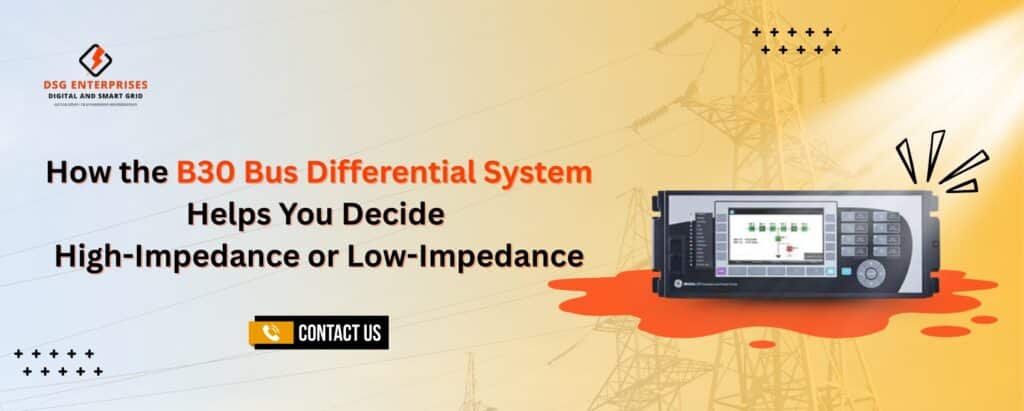
The B30 Bus Differential System is built for modern substations that need fast and accurate busbar protection. Many industries and utilities trust this system because it is simple, secure, and highly reliable. The system also works with different layouts, which makes daily operation smooth. The GE B30 Bus Differential Relay brings advanced functions that give users full clarity during fault conditions.
Many engineers also check the GE B30 Bus Differential Relay Price before choosing the device. They also compare quotes from multiple GE B30 Bus Differential Relay Suppliers. These factors also help in choosing the best scheme for the network. In this blog, we keep things simple and explain how the B30 system supports both high-impedance and low-impedance options.
Why Choosing the Right Busbar Protection Matters
Busbar faults are rare but can cause very heavy damage. The fault spreads fast and can take down a full section of the power system. A strong busbar protection system is needed to reduce the risk, and this is where the B30 Bus Differential System helps a lot. It keeps the system safe by detecting even the smallest current imbalance.
The GE B30 Bus Differential Relay uses secure logic to avoid false trips. It also works well in complex networks where stability is important. Engineers need to consider design, CT performance, and fault levels when choosing between high-impedance and low-impedance options. This relay makes the process simple.
Understanding High-Impedance Schemes
A high-impedance scheme uses a stabilizing resistor to avoid false trips from CT saturation. These schemes work well in small or simple busbar designs. Many older networks still use this method.
High impedance is best when:
- CTs have the same ratio
- CT accuracy is stable
- The network is not very complex
The B30 Bus Differential System gives proper support when engineers want to choose this method. The relay logic helps check CT balance and stability. This is useful when the system has limited expansion needs.
Understanding Low-Impedance Schemes
Low-impedance schemes are more common today. They work well in complex and large networks. They also handle different CT ratios with ease. Low-impedance relays use numerical algorithms to decide whether the fault is inside or outside the zone.
Low impedance is best when:
- The network is large
- CT ratios vary
- Many feeders connect to one bus
The GE B30 Bus Differential Relay is mainly designed for low-impedance protection. Many users trust this system for fast operation and detailed fault analysis. Many compare the GE B30 Bus Differential Relay Price and find that it provides high value for the features it offers.
How the B30 System Helps You Decide the Best Scheme
The B30 Bus Differential System gives full data, smooth configuration, and clear fault logic that help engineers pick the right method. It does not force one method over the other. Instead, it gives the tools needed to check the network and choose the safer option.
Here is how the system guides your decision:
- Real-Time Fault Data: Helps confirm CT performance
- Advanced Stability Logic: Reduces false trips
- Fast Trip Time: Works well in both schemes
- Clear Settings Menu: Helps compare impedance options
- Wide Compatibility: Works with many substation layouts
These features allow any engineer to choose the best setup with confidence.
Benefits of Using B30 in High-Impedance Busbar Protection
When used in a high-impedance scheme, the B30 Bus Differential System gives stability and safe operation. The relay adapts to different load values and fault levels. Many industries use it in simple substations where reliability is the main concern.
Key benefits include:
- Fast response: Protects even during heavy CT saturation
- Simple wiring: Needs fewer components
- Stable operation: Works well in low-fault systems
- Clear fault logs: Helps reduce downtime
This mode is easy to maintain and suitable for networks with limited future expansion.
Benefits of Using B30 in Low-Impedance Busbar Protection
Most modern substations prefer low impedance. The GE B30 Bus Differential Relay is very advanced in this setup.
You get:
- High sensitivity: Detects small internal faults
- More flexibility: Handles different CT ratios
- Detailed analysis: Gives clear fault information
- Secure operation: Avoids trips during external faults
Users also search for the GE B30 Bus Differential Relay Suppliers to compare product support and service quality. Good suppliers help with setup and relay integration.
Real-World Example
Here are simple points to understand how the system helps:
- High-Impedance Benefits: Stable, simple, and safe for small systems.
- Low-Impedance Benefits: Smart logic, flexible CT handling, fast decisions.
- B30 Advantage: Works in both options with strong protection logic.
- Easy Selection: Relay data helps you choose the right method.
- Cost Planning: Compare the GE B30 Bus Differential Relay Price to plan budgets.
- Trusted Delivery: Choose from good GE B30 Bus Differential Relay Suppliers for smooth installation.
- Future Ready: The B30 Bus Differential System supports expansion needs.
These points make the relay easy to use and smart for all users.
Many engineers share that busbar faults can be stressful. A small mistake can cause heavy downtime. One engineer from a large plant shared how the GE B30 Bus Differential Relay helped their team. Their old system had false trips, and they felt pressure every time faults came.
After installing the B30 Bus Differential System, they felt more confident. They could read clear data and understand the fault type quickly. They could check CT health and compare impedance values with ease. Their downtime is reduced, and their stress is also reduced. The system helped them work smoothly and make better decisions.
This is how a good protection system brings comfort along with safety.
Conclusion
The B30 Bus Differential System makes it easy to choose between high-impedance and low-impedance schemes. The relay gives clear data, strong logic, and dependable operation. Whether your network is small or large, this system offers safe and flexible protection.
The GE B30 Bus Differential Relay delivers strong performance in both schemes. Many users also check the GE B30 Bus Differential Relay Price and compare options from trusted GE B30 Bus Differential Relay Suppliers. This helps them plan their protection upgrades better.
If you want accurate results, fast trips, and reliable performance, the B30 Differential System is a great choice. It gives you confidence and makes your power system safer for many years.
At Digital & Smart Grid Enterprises, we take pride in being one of the trusted Bus Differential System suppliers and exporters. Our mission is to deliver reliable and customized protection relay solutions tailored to various industrial applications. For B30 Bus Differential System price or product inquiries, contact us at +91 7021624024 or email marketing@dsgenterprises.in. With our strong technical expertise, we provide complete support from product selection to after-sales service. Discover our extensive product range by clicking here for more information