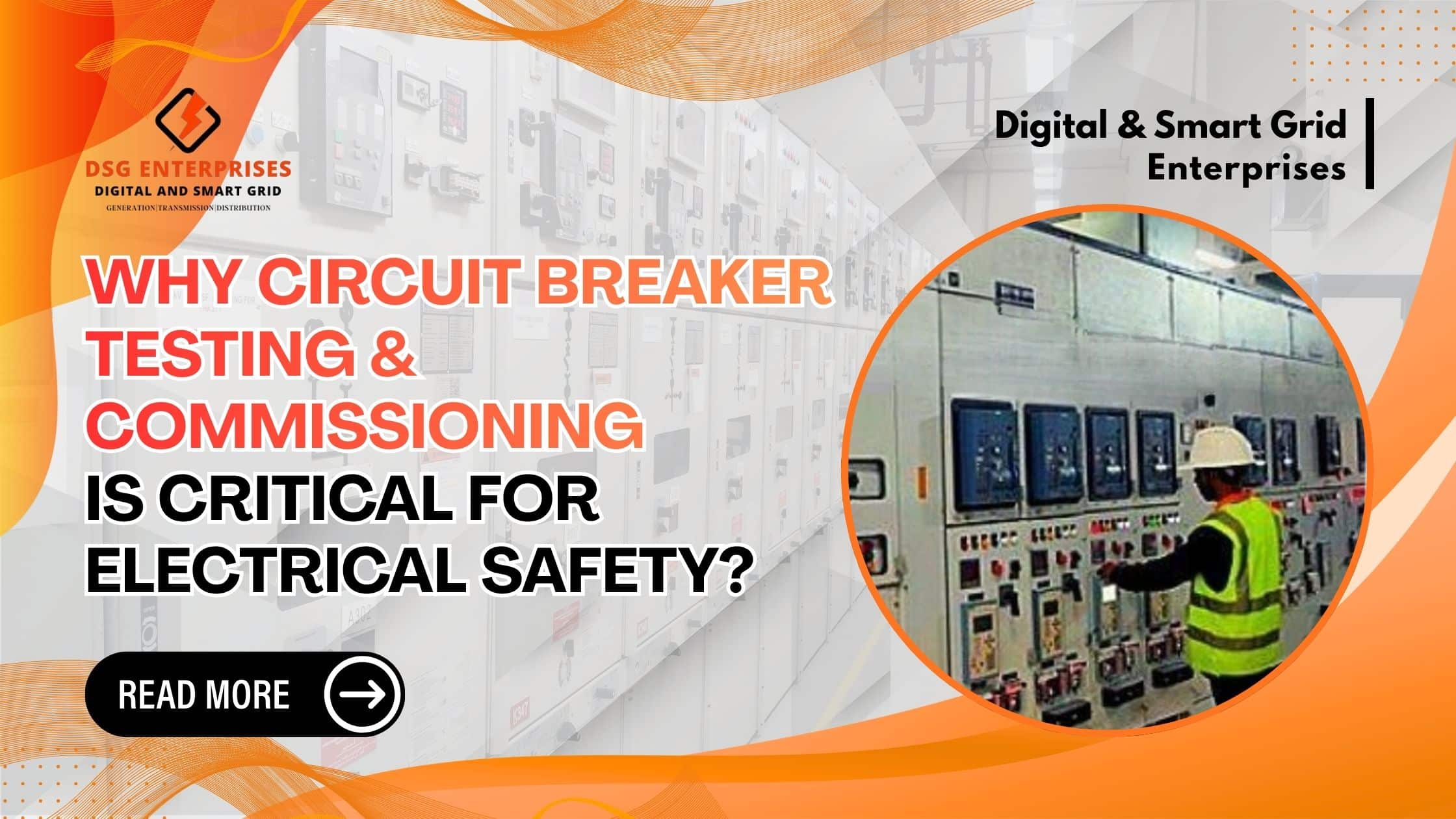
Electrical systems are the backbone of every modern facility, from industrial plants and commercial buildings to residential complexes. At the heart of these systems lies a critical component. That often goes unnoticed until something goes wrong, the circuit breaker. While most people assume circuit breakers simply “work,” the reality is that without proper circuit breaker servicing. These protective devices can fail silently, and the consequences can be catastrophic.
This blog dives deep into why circuit breaker testing and commissioning is not just a maintenance checkbox. But a non-negotiable pillar of electrical safety.
What Is Circuit Breaker Testing & Commissioning?
Circuit breaker testing and commissioning is the process of verifying that a circuit breaker operates correctly. Both mechanically and electrically, before it is energized or put back into service after maintenance. This process ensures the breaker will trip at the right current levels. Within the right time frame, and without causing collateral damage to the system.
Commissioning is typically done on new installations, while testing is performed periodically throughout the breaker’s operational life as part of a structured Circuit Breakers Servicing program.
Why Circuit Breaker Testing Is Non-Negotiable
Many facility managers and electrical engineers underestimate the risk of skipping breaker testing. Here’s why that’s a dangerous gamble:
- Silent degradation: Circuit breakers can mechanically degrade over time without showing visible signs. Internal contacts corrode, springs weaken, and insulation deteriorates, all without any external indication.
- Manufacturer tolerances drift: Even high-quality breakers shift away from their factory-set trip. Thresholds over years of operation, especially in harsh environments.
- Thermal and magnetic mechanisms wear: The thermal and magnetic elements inside a breaker are precision components. Without periodic testing, there’s no way to confirm they still respond accurately to fault conditions.
- Regulatory compliance: Most national electrical codes and international standards (IEC, IEEE, NFPA 70B). Mandate periodic testing and documentation of circuit breaker performance.
- Insurance requirements: Many commercial and industrial insurers require documented Circuit Breakers Servicing records to maintain coverage validity.
The Real Risks of Skipping Circuit Breaker Testing
Neglecting circuit breaker testing doesn’t just increase risk, it invites disaster. Here are the real-world consequences:
- Electrical fires: A breaker that fails to trip during an overload allows excessive current to flow. Heating wiring insulation to the point of combustion.
- Equipment damage: Unprotected fault currents can destroy motors, transformers, switchgear, and other high-value assets in milliseconds.
- Arc flash incidents: Faulty breakers dramatically increase the risk of arc flash events. Explosions of electrical energy that can cause severe burns, blindness, or death.
- Unplanned downtime: A breaker that trips unnecessarily or fails to trip at the right moment. That can halt production lines, disrupt data centers, or shut down critical infrastructure.
- Legal liability: In the event of an electrical incident, facility owners without proper testing records face significant legal and financial exposure.
Key Steps in Professional Circuit Breaker Testing & Commissioning
A qualified Circuit Breakers Servicing Provider follows a structured, multi-step process to ensure every breaker meets its performance specifications:
- Visual inspection: Technicians examine the breaker housing, terminals, bus connections, and arc chutes for physical damage, contamination, corrosion, or signs of overheating.
- Insulation resistance testing: A megohmmeter is used to verify that the insulation between conductors and between phases meets minimum resistance thresholds, preventing leakage currents.
- Contact resistance testing: Micro-ohmmeter testing measures the resistance across the breaker’s main contacts. High contact resistance indicates worn or pitted contacts that generate excessive heat.
- Primary injection testing: High current is injected through the breaker to simulate actual overload and fault conditions, verifying that the breaker trips within specified time-current curves.
- Secondary injection testing: A test signal is applied directly to the trip unit. Electronics to verify the logic, settings, and firmware of electronic or digital trip units.
- Timing tests: The exact time it takes for the breaker to trip at various current multiples. Is measured and compared against manufacturer specifications.
- Mechanical operation tests: Open/close cycling verifies that the operating mechanism functions smoothly, latches correctly, and that stored energy (in spring-operated breakers) is within acceptable limits.
- Trip unit calibration: Electronic trip units are verified and recalibrated to ensure overcurrent, short-circuit, and ground fault settings match the system’s coordination study requirements.
- Thermographic scanning: Infrared imaging identifies hot spots in connections and internal components. That may indicate developing faults not visible to the naked eye.
- Documentation and reporting: All test results are recorded and compared to baseline and previous results. Forming a traceable maintenance history that satisfies regulatory and insurance requirements.
Understanding Circuit Breakers Servicing Cost
One of the most common reasons facility managers delay maintenance is concern over Circuit Breakers Servicing Cost. However, viewing servicing as an expense rather than an investment is a costly misconception.
Here’s a realistic breakdown of what influences servicing costs, and why they’re justified:
- Breaker type and voltage class: Low-voltage breakers (up to 1,000V) are generally less expensive to service than medium-voltage or high-voltage units, which require specialized equipment and expertise.
- Breaker age and condition: Older breakers or those in poor condition may require additional cleaning, lubrication, parts replacement, or recalibration, increasing the scope of work.
- Number of breakers: Bulk servicing of multiple units in a switchgear lineup or distribution board is typically more cost-efficient per unit than single-breaker service calls.
- Site accessibility and safety requirements: Breakers in confined spaces, hazardous locations, or high-voltage environments require additional safety precautions and trained personnel, impacting cost.
- Testing equipment required: Advanced tests like primary injection and thermographic scanning require calibrated, specialized equipment, a reflection of the technical investment your Circuit Breakers Provider makes.
- Reporting and documentation: Comprehensive test reports, coordination study reviews, and compliance documentation increase professional value and influence service pricing.
The average Circuit Breakers Servicing Cost is a fraction of what a single electrical incident, equipment failure, or unplanned outage would cost in repairs, lost production, legal claims, and reputational damage. The ROI is overwhelmingly positive.
How to Choose the Right Circuit Breakers Servicing Provider
Not all electrical maintenance contractors are equal. Choosing the right Circuit Breakers Servicing Provider is critical to getting accurate results and genuine protection. Here’s what to look for:
- Certifications and qualifications: Look for providers with NETA (InterNational Electrical Testing Association) certification, or equivalent national credentials, which confirm adherence to rigorous testing standards.
- Manufacturer-trained technicians: Some breaker types require OEM-specific training. Ensure your provider has hands-on experience with your specific makes and models.
- Calibrated test equipment: All test instruments should carry current calibration certificates traceable to national standards bodies.
- Comprehensive reporting: A professional provider delivers detailed test reports with pass/fail criteria, trend analysis, and clear recommendations, not just a sign-off sheet.
- Emergency response capability: Electrical failures don’t follow business hours. Choose a provider who offers emergency callout services.
- Proven track record: Ask for references from similar industries or facilities. Experience in your sector (industrial, commercial, healthcare, data centers) is a significant advantage.
- Insurance and compliance knowledge: Your provider should understand local electrical codes, insurance requirements, and help you maintain a compliant maintenance schedule.
How Often Should Circuit Breakers Be Serviced?
Industry standards and manufacturers generally recommend:
- Low-voltage breakers: Every 1–3 years depending on operating environment and criticality
- Medium-voltage breakers: Annually or per manufacturer recommendation
- After any fault event: Immediate inspection and testing following any short circuit or significant overload
- Before or after extended shutdown: Breakers that sit idle for extended periods require commissioning before re-energization
Your Circuit Breakers Servicing Provider can help you develop a risk-based maintenance schedule aligned with your facility’s specific needs and regulatory obligations.
Conclusion
Circuit breakers are silent sentinels standing between your electrical system and disaster. They perform one of the most critical safety functions in any facility, but only if they’re properly maintained, tested, and commissioned.
Investing in professional Circuit Breakers Servicing isn’t bureaucratic box-ticking. It’s a proactive commitment to protecting your people, your assets, your operations, and your legal standing. Whether you’re evaluating Circuit Breakers Servicing Cost for budget planning or actively searching for a reliable Circuit Breakers Servicing Provider, remember: the cost of prevention will always be less than the cost of failure. For pricing or inquiries, feel free to contact us at +91 7021624024 or email info@dsgenterprises.in. Our experienced technical team is here to guide you at every stage, from choosing the right product to ensuring reliable after-sales support. Click here to explore our complete range of products and learn more.