A single unprotected generator fault can shut down an entire power plant within seconds. That is why protection engineers across India trust proven numerical relays instead of gambling on outdated hardware.
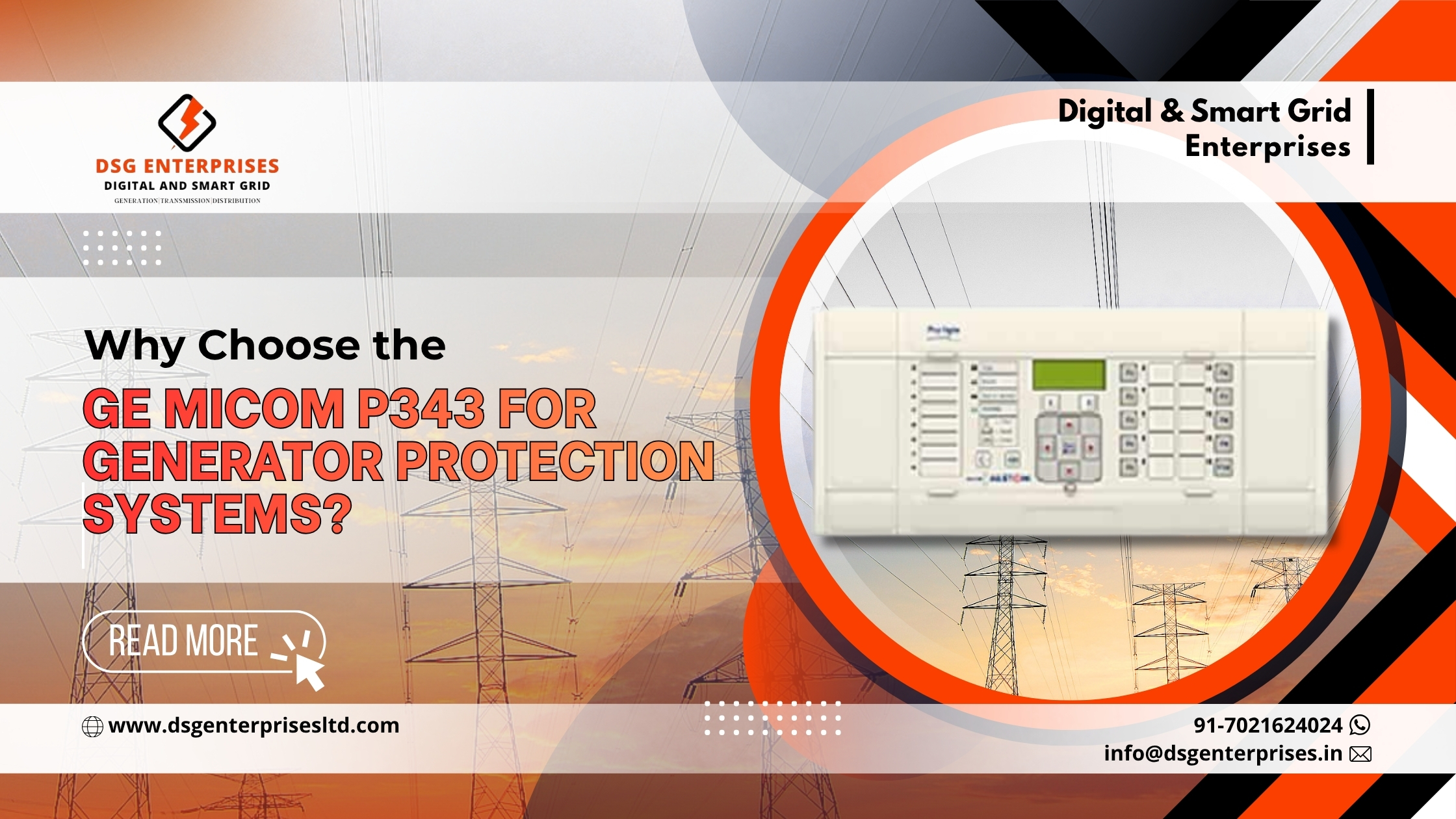
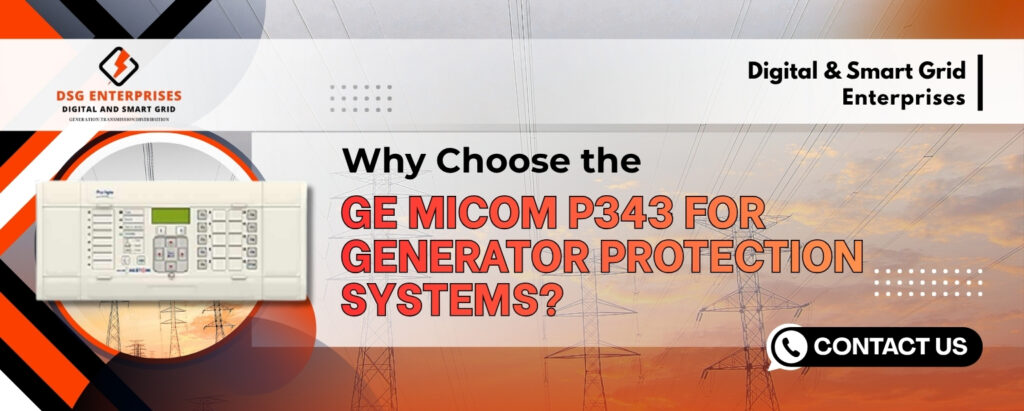
The GE MICOM P343 Relay is built for medium- to large generators above 10 MVA. It delivers differential protection, stator earth fault coverage, and pole slipping detection in one unit. This makes it a dependable choice for critical generator protection schemes.
Generator protection is not optional; it is the backbone of plant reliability. Utilities, EPC contractors, and industrial plants across India are upgrading aging schemes. As a result, the P343 Generator Protection Relays family has become a preferred name. This blog explains why engineers, procurement managers, and plant owners keep choosing it.
What Makes the GE MiCOM P343 Different From Older Relays?
Older electromechanical and static relays offer limited functions and no communication support. Consequently, plant operators lose visibility into generator health until a fault already occurs.
A numerical relay, a microprocessor-based device that digitizes signals for fast, programmable fault detection, is essential for modern plants. It replaces several single-function devices with one intelligent unit. The GE Micom P343 Numerical Relay brings this digital advantage directly to generator protection.
Here is what sets it apart:
- Generator differential protection for fast, selective tripping;
- 100% stator earth fault protection using the 3rd harmonic method;
- Pole slipping and unintentional energization at standstill protection;
- Four alternative setting groups for flexible operating conditions;
- Comprehensive disturbance and fault recording for post-event analysis.
Not only that, but the relay also supports commissioning test facilities that speed up plant start-up. Fully customizable menu texts make day-to-day operation simpler for site staff, even under time pressure. In short, the P343 combines multiple protection functions once spread across separate panels. That single-box design is exactly why engineers keep it on their shortlist.
How Does the GE MiCOM P343 Protect Medium to Large Generators?
Generators above 10 MVA face unique risks. Rotor faults, thermal overload, and pole slipping can all cause serious damage. Therefore, protection must be fast, sensitive, and reliable.
The GE MICOM P343 Relay addresses these risks directly. It uses a low-frequency injection method for sensitive rotor earth fault protection. This method is more accurate than older insulation-monitoring schemes. As a result, faults are detected earlier, and downtime is reduced.
Key protection features include:
- Generator and transformer thermal overload monitoring;
- Transformer loss-of-life and through-fault monitoring;
- Extensive protection for large machines, including pole slipping;
- Harsh environment options for corrosive gas exposure, such as H2S or SO2.
Generators rated above 10 MVA typically need dedicated differential and stator earth fault protection. This is standard practice for meeting grid code compliance in India. Consequently, the P343 fits naturally into such installations. Moreover, its fault recording tools help engineers analyze root causes quickly instead of guessing. In short, it keeps large generators running safely under demanding site conditions, day after day.
Why Do Engineers Prefer Programmable Scheme Logic?
Engineers often struggle with rigid protection schemes that need external logic controllers for custom applications. This adds cost, wiring complexity, and extra points of failure on site.
Graphical programmable scheme logic solves this problem well. It lets engineers build custom protection and control logic inside the relay itself. Furthermore, programmable function keys and configurable digital inputs make commissioning faster and less error-prone on busy project sites.
Additional relay management functions include:
- Circuit breaker control, status, and condition monitoring;
- Trip circuit and coil supervision for continuous tripping readiness;
- Sequence of event recording for detailed fault investigation;
- Real-time clock synchronization via IRIG-B, Opto input, or communications;
- Multi-level password protection against unauthorized configuration changes.
When engineers configure logic on-screen, commissioning time drops and wiring errors fall sharply. That convenience is a leading reason teams pick this relay for new and retrofit projects. It also shortens site visits, since much of the configuration work can happen before the relay ever reaches the panel.
What Communication Protocols Does the P343 Support?
Modern substations need seamless data exchange between relays, SCADA systems, and control centers. Without strong protocol support, integration becomes slow, costly, and unreliable over time.
The GE Micom P343 Numerical Relay supports MODBUS, DNP3, IEC 60870-5-103, and IEC 61850 protocols. In addition, it offers IEC 61850 and DNP3.0 redundant Ethernet. As a result his includes self-healing ring, RSTP, dual-homing, and PRP configurations for tough environments.
This wide protocol range benefits utilities in several ways:
- Easier integration with existing SCADA and DCS platforms;
- Remote monitoring and control from a central location;
- Redundant Ethernet paths that reduce communication downtime;
- Standardized data models under IEC 61850 for future scalability.
As a result, plant managers gain real-time visibility without replacing their entire communication network. When, for example, a fault occurs at midnight, engineers can review event records remotely instead of driving to the site. On the other hand, sites without strong protocol support often face delayed diagnostics and longer outages. Hence, reliable protocol support is what makes remote generator monitoring genuinely practical today.
Why Buy From a Trusted MICOM P343 Generator Protection Relay Supplier?
Sourcing generator protection relays from an unverified vendor carries real risk. Counterfeit units, missing documentation, and poor after-sales support can compromise plant safety. Therefore, supplier credibility matters as much as the relay’s specifications.
As a leading MICOM P343 Generator Protection Relay supplier in India, DSG Enterprises Ltd. provides genuine GE and Alstom protection relays. As a result, every unit is backed by proper technical documentation and responsive support. Working with an authorized distributor also means faster spare parts availability during outages.
When evaluating a relay supplier, consider these factors:
- Proof of authorized distribution from GE or Alstom;
- Availability of documentation, test certificates, and warranty support;
- Field service and commissioning assistance from trained engineers;
- Transparent quotations with no hidden costs or delivery surprises.
Choosing a reliable supplier protects both your investment and your plant’s uptime for years to come. On the other hand, an unreliable vendor can leave a plant waiting weeks for a single replacement part.
How Should Buyers Evaluate MICOM P343 Generator Protection Relay Price?
Price comparisons without context often mislead buyers. The cheapest quote is not always the best value for a critical protection asset. Instead, procurement teams should weigh price against protection scope and support.
The MICOM P343 Generator Protection Relay price depends on configuration, protocol options, and hardware add-ons. Harsh environment protection, for instance, adds cost but extends relay life in coastal or industrial plants. Consequently, requesting a detailed quote helps buyers compare offers fairly.
Factors that influence the final price include:
- Number of protection functions and setting groups required;
- Communication protocol options selected (MODBUS, DNP3, IEC 61850);
- Harsh environment or corrosive gas protection add-ons;
- Warranty duration and after-sales service package included.
A well-structured quotation prevents budget surprises during project execution. Comparing total value, not just upfront cost, leads to smarter, longer-lasting procurement decisions for any plant.
Where Is the GE MiCOM P343 Used Across Indian Power Plants?
India’s power sector runs on a mix of thermal, hydro, and captive industrial generation. Each of these plants needs dependable generator protection to avoid costly, unplanned shutdowns.
The GE MICOM P343 Relay is already installed across many such sites. Power utilities use it for grid-connected generators, while industrial plants rely on it for captive power units. Furthermore, EPC contractors specify it in new substation and powerhouse projects.
Common application areas include:
- Thermal and hydro power generating stations;
- Captive power plants in steel, cement, and chemical industries;
- Co-generation units at sugar mills and paper plants;
- Retrofit projects replacing older electromechanical relays.
When an EPC contractor plans a new powerhouse, generator protection cannot be an afterthought. Specifying a proven relay early avoids rework and delays later. Meanwhile, maintenance teams appreciate a relay with a strong installed base, since spare parts and field expertise are easier to find. Hence, this wide adoption shows why the relay remains a trusted standard across diverse plant types.
Frequently Asked Questions
Q: What generator size is the GE MiCOM P343 designed for?
The GE MiCOM P343 suits medium to large generators rated above 10 MVA. It provides differential protection, stator earth fault protection, and pole slipping detection in one compact unit.
Q: Which communication protocols does the P343 relay support?
The P343 supports MODBUS, DNP3, IEC 60870-5-103, and IEC 61850. It also offers redundant Ethernet options, including a self-healing ring, RSTP, and PRP, for reliable SCADA integration.
Q: How does the P343 detect rotor earth faults?
The relay uses low-frequency injection for sensitive rotor earth fault detection. This method improves early fault detection compared with older insulation-monitoring techniques, helping reduce unplanned generator downtime.
Q: Why should I buy from an authorized MICOM P343 supplier?
An authorized supplier provides genuine hardware, proper documentation, and dependable after-sales support. This reduces counterfeit risks while ensuring faster access to spare parts and warranty services.
Conclusion
The GE MICOM P343 Relay brings together differential protection, stator earth fault coverage, pole slipping detection, and flexible communication support in one dependable numerical relay. For engineers and procurement teams managing large generators, it offers a proven way to cut downtime.
If your plant needs reliable generator protection, work with an authorized supplier who can guide specification, pricing, and commissioning. Reach out to a trusted MICOM P343 Generator Protection Relay supplier today and secure your generator protection upgrade.
At Digital & Smart Grid Enterprises, we offer advanced generator protection solutions with the GE MiCOM P343 Relay to protect the generator from electrical faults and abnormal operating conditions. With comprehensive protection functions, reliable fault detection, and monitoring capabilities, the P343 helps utilities and industries improve generator safety, reliability, and operational continuity. Click here to inquire about the GE Generator Protection price or suppliers for your generator protection requirements. Contact us at +91 7021624024 or email info@dsgeneterprises.in. Protect your generators with reliable relay technology and expert technical support. Connect with our specialists today.