In today’s industrial landscape, motor protection is not just a technical requirement it is the backbone of operational continuity and equipment safety. Whether you are building a new Motor Control Center (MCC) or upgrading an existing one, integrating advanced motor protection relays such as the
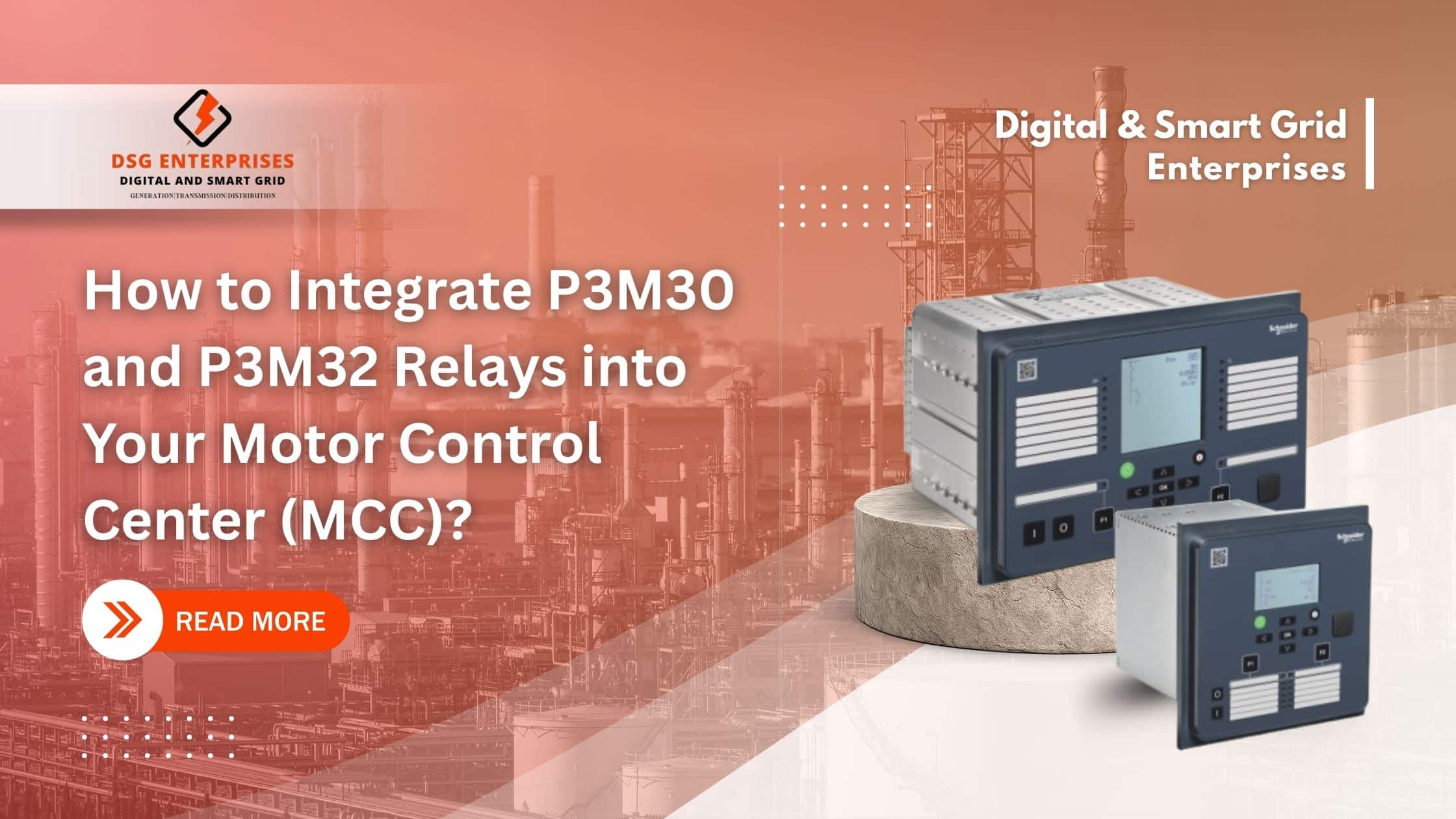
Schneider P3M30 Motor Protection Relay and the P3M32 relay can significantly enhance the reliability, efficiency, and longevity of your electrical systems. These relays are engineered to deliver superior protection against overloads, phase failures, thermistor faults, and other critical motor faults.
This comprehensive guide walks you through the step-by-step process of integrating P3M30 and P3M32 relays into your MCC, covering technical specifications, wiring fundamentals, commissioning steps, and best practices for optimal performance.
What Are P3M30 and P3M32 Motor Protection Relays?
Before diving into integration steps, it is important to understand what the Schneider P3M30 Motor Relay and the P3M32 relay are and what makes them stand out in industrial motor protection applications.
The Schneider P3M30 Motor Protection Relay is a compact, multi-function motor protection device designed for three-phase motor applications. It offers robust protection against a wide range of electrical faults and is widely recognized for its ease of installation and configuration. The P3M32 is an advanced variant in the same relay family, offering extended protection features such as ground fault detection, asymmetry monitoring, and enhanced communication options.
Key Features at a Glance:
- Overload protection: Ensures motors are not subjected to excessive current that can cause insulation damage and overheating.
- Phase failure and asymmetry detection: Monitors three-phase voltage balance to protect against single-phasing conditions.
- Thermistor input (PTC/NTC): Directly monitors motor winding temperature for advanced thermal protection.
- Adjustable trip class: Trip class settings from Class 5 to Class 30 to match various motor types.
- Wide supply voltage range: Compatible with a broad range of voltage inputs for global applicability.
- Compact DIN rail mounting: Suitable for space-constrained MCC panels.
- LED indication: Provides a clear visual status of relay condition and fault type.
Why Integrate P3M30 and P3M32 Relays into Your MCC?
Motor Control Centers are the nerve centers of industrial electrical distribution, housing motor starters, variable frequency drives, and protective devices. Integrating the Schneider P3M30 Motor Protection Relay and P3M32 relay into your MCC offers several tangible operational benefits:
- Enhanced motor lifespan: By accurately detecting and responding to fault conditions, these relays prevent motor damage and extend operational life.
- Reduced downtime: Quick-response fault detection minimizes unexpected shutdowns and enables faster fault diagnosis.
- Regulatory compliance: Meeting international electrical standards such as IEC 60947-4-1 becomes straightforward with certified Schneider relays.
- Energy efficiency: Preventing abnormal operating conditions helps maintain optimal motor efficiency and reduces energy waste.
- Simplified maintenance: Comprehensive fault logging and LED indicators make troubleshooting faster and more intuitive.
- Scalability: Both relays support integration with SCADA and BMS systems for centralized monitoring.
Pre-Integration Planning and Preparation
Successful relay integration begins well before any wiring takes place. Thorough pre-integration planning ensures your project runs smoothly and meets safety requirements.
Step 1: Assess Motor Specifications
Gather the following motor nameplate data before selecting and configuring your relay:
- Rated current: This determines the relay’s current setting range.
- Rated voltage: Ensure relay compatibility with system voltage
- Motor power rating (kW or HP): Helps validate the relay’s suitability.
- Service factor: Important for accurate overload threshold settings.
- Motor application type: Pump, fan, compressor, or conveyor, each may require different trip class settings.
Step 2: Verify Relay Selection
Confirm that the Schneider P3M30 Motor Relay or P3M32 matches your application requirements by reviewing the product datasheet. Key parameters to verify include the current setting range, supply voltage, relay output type (NO/NC contacts), and whether thermistor inputs are required. It is advisable to consult a certified Schneider P3M30 Motor Relay Supplier to confirm product suitability and to obtain genuine components for your project.
Step 3: Review MCC Panel Layout
Analyze your existing MCC layout to identify available DIN rail space, wiring conduit routing, and proximity to contactor and overload relay slots. The P3M30 and P3M32 are designed for DIN rail mounting, making them easily accommodated in standard MCC enclosures.
Step-by-Step Integration Process
Step 4: Physical Mounting on DIN Rail
- Isolate the MCC panel: Always de-energize the panel and follow LOTO (Lockout/Tagout) procedures before installation.
- Mount the relay: Snap the P3M30 or P3M32 securely onto the DIN rail within the designated motor starter compartment.
- Allow clearance: Maintain adequate spacing around the relay for heat dissipation and cable management.
- Secure the mounting: Verify that the relay is firmly clipped and does not shift when terminal connections are made.
Step 5: Wiring the Control Circuit
The Schneider P3M30 Motor Protection Relay and P3M32 relay require careful control circuit wiring. Follow the terminal diagram provided in the product manual precisely:
- Supply voltage terminals (A1/A2): Connect the relay supply voltage matching your control circuit (typically 24VAC/DC or 110–240VAC depending on the model).
- Current transformer (CT) input terminals: Route the motor phase conductors through the relay’s integrated current transformer or connect external CTs as specified.
- Output relay contacts (11-12, 14): Wire the normally closed (NC) contact in series with the contactor coil control circuit to enable trip interruption on fault detection.
- Thermistor input terminals (T1/T2): If using PTC/NTC thermistors embedded in motor windings, connect them to the designated thermistor input terminals.
- Reset terminal: Wire the manual or automatic reset input based on your application’s requirements.
Step 6: Setting the Relay Parameters
Once wiring is complete, configure the relay settings using the front-panel rotary dials or digital interface:
- Current setting: Set the dial to the motor’s full load current rating. This is the fundamental overload threshold.
- Trip class selection: Choose the appropriate trip class (e.g., Class 10 for standard motors, Class 20 for high-inertia loads) based on motor starting characteristics.
- Phase failure sensitivity: Enable phase failure detection to guard against single-phase conditions.
- Thermistor mode: Activate PTC or NTC thermistor monitoring if temperature sensors are installed in the motor.
- Reset mode: Select automatic or manual reset based on the application’s safety requirements. Manual reset is recommended for critical applications.
Commissioning and Testing
After physical installation and parameter configuration, commissioning tests validate the relay’s correct operation before the motor is put into service.
Step 7: Perform Functional Tests
- Continuity check: Verify all control wiring connections using a multimeter before energizing.
- Supply voltage test: Energize the relay supply and confirm the LED power indicator illuminates correctly.
- Trip simulation test: Temporarily simulate an overload or phase failure condition to verify that the relay trips and opens the contactor as expected.
- Reset function test: After a simulated trip, test both manual and automatic reset (as applicable) to confirm correct recovery behavior.
- Thermistor test: If PTC/NTC thermistors are connected, verify correct response by applying a test resistance matching trip thresholds.
Step 8: Motor Run Test
Start the motor under normal load conditions and verify that the relay does not nuisance trip. Monitor the relay’s LED status during motor starting and steady-state operation. Record the actual running current and confirm it aligns with the motor nameplate rating.
Common Integration Mistakes to Avoid
- Incorrect current setting: Setting the relay current higher than the motor FLA to prevent nuisance tripping actually eliminates protection. Always set it accurately.
- Wrong trip class: Choosing a trip class that is too low for high-inertia loads causes unnecessary trips during motor starting.
- Ignoring thermistor inputs: Failing to connect motor-embedded thermistors leaves a critical layer of protection unused.
- Skipping functional tests: Energizing the system without commissioning tests can leave wiring faults undetected.
- Using non-genuine components: Always source from a verified Schneider P3M30 Motor Relay Supplier to ensure product authenticity and warranty coverage.

Schneider P3M30 Motor Relay Price and Sourcing Guidance
When planning your MCC integration project, understanding the Schneider P3M30 Motor Relay Price is an essential part of budgeting and procurement strategy. The price of the P3M30 and P3M32 relays can vary depending on the specific model variant, regional distributor pricing, project quantity, and any applicable taxes or import duties.
Here are some practical sourcing tips:
- Buy from authorized distributors: Always purchase from an authorized Schneider P3M30 Motor Relay Supplier to guarantee product authenticity, warranty, and technical support.
- Request project pricing: For bulk procurement, contact your supplier for volume discounts that can significantly reduce per-unit cost.
- Compare total cost of ownership: While evaluating Schneider P3M30 Motor Relay Price, factor in long-term benefits such as reduced motor replacement costs, lower downtime expenses, and extended equipment lifespan.
- Verify product documentation: Ensure that the relay comes with original Schneider documentation, calibration certificates, and compliance markings.
- Consider regional availability: Lead times can vary. Working with an established Schneider P3M30 Motor Relay Supplier helps ensure timely delivery for project schedules.
Best Practices for Long-Term Relay Performance
To maximize the performance and reliability of your Schneider P3M30 Motor Protection Relay and P3M32 relay over the long term, follow these best practices:
- Periodic inspection: Conduct visual inspections of relay terminals, LED indicators, and physical mounting every six months.
- Calibration verification: Cross-check the relay’s current setting against the motor’s actual running current annually.
- Wiring integrity checks: Inspect terminal tightness and insulation condition to prevent loose connections that could cause false trips.
- Firmware and settings documentation: Keep a written record of all relay settings for quick reference during maintenance or after a relay replacement.
- Training maintenance personnel: Ensure that maintenance staff are familiar with relay operation, fault codes, and reset procedures.
- Replacement planning: Maintain a spare relay in your electrical store to minimize downtime in the event of a relay failure.
Conclusion
Integrating the Schneider P3M30 Motor Protection Relay and P3M32 relay into your Motor Control Center is a highly effective strategy to protect motors, reduce operational risks, and ensure regulatory compliance. By following a structured approach from pre-integration planning and physical mounting to parameter configuration, commissioning, and long-term maintenance, you can maximize the return on investment from these advanced motor protection devices.
Whether you are evaluating Schneider P3M30 Motor Relay Price for budget planning, sourcing from a trusted Schneider P3M30 Motor Relay Supplier, or commissioning an existing installation, the comprehensive protection offered by the Schneider P3M30 Motor Relay makes it an indispensable component in any modern industrial electrical infrastructure.
We, Digital and Smart Grid Enterprises, are the leading Schneider Easergy Relays Suppliers, traders, distributors, and exporters in Mumbai. Schneider Easergy Relays is a medium-voltage safety relay that includes protection for feeders, motors, transformers, and generators. The new Easergy relay has been created to satisfy your needs, including overcurrent and arc flash protection, the latest connections, and maximum safety. It is based on more than 100 years of experience in medium-voltage protection relays. For Schneider P3M30 Motor Protection Relay prices or product inquiries, you can reach us at +91 7021624024 or email info@dsgenterprises.in. With strong technical expertise, our team supports you at every step from selecting the right product to providing complete after-sales assistance. Explore our full range of products by clicking here for more details