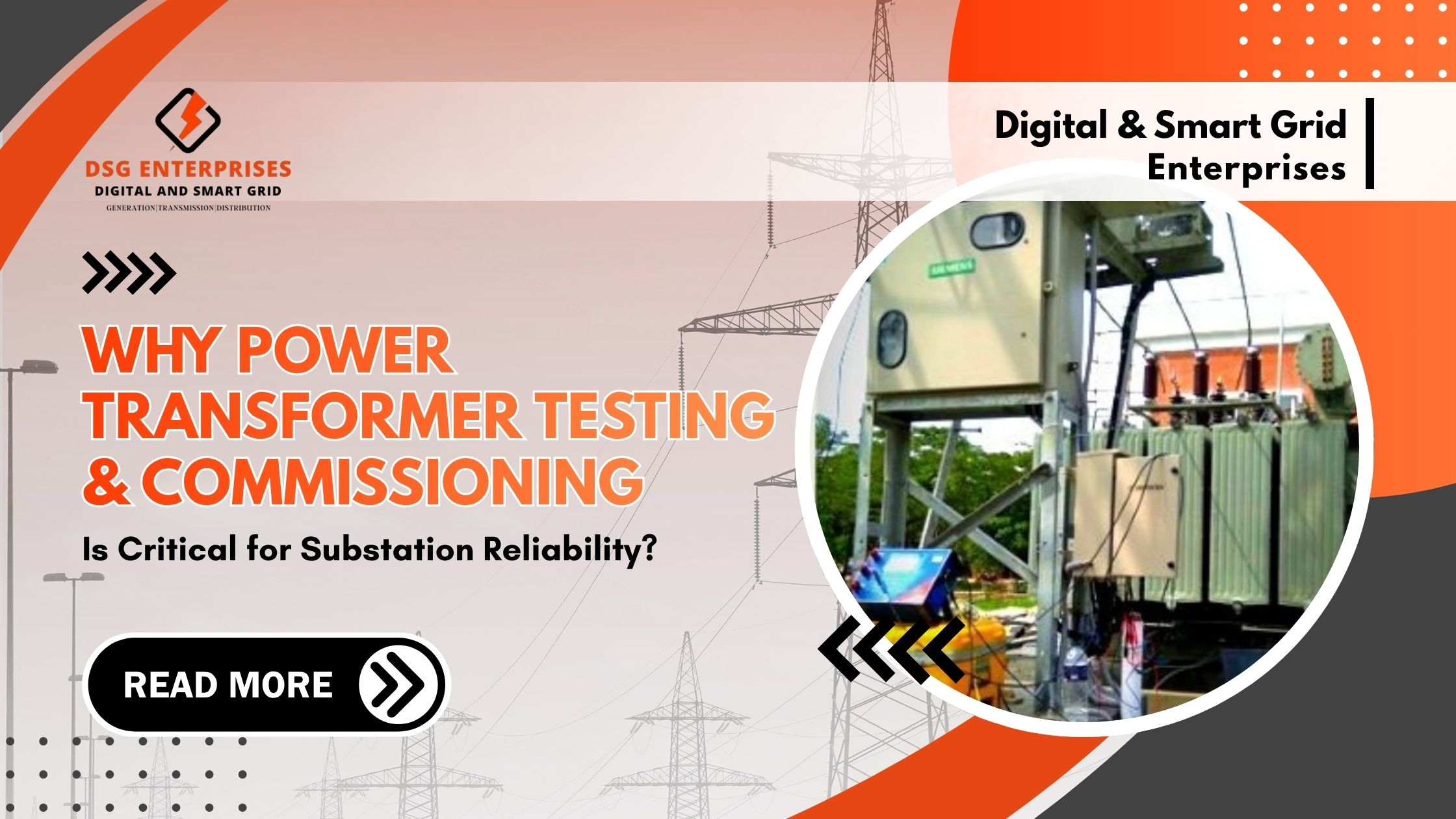
Power transformers serve as the backbone of electrical substations worldwide. These machines convert voltage levels and distribute electricity to millions of homes and businesses every single day. However, many facility managers and engineers overlook one critical aspect that directly impacts their substation’s reliability, Power Transformer Testing & Commissioning.
If you operate a power substation in India or anywhere globally, you need to understand why this process matters. A single failure in power transformer testing can lead to catastrophic consequences. We’re talking about power outages, equipment damage, safety hazards, and massive financial losses.
In this comprehensive guide, we’ll explore exactly why Transformer Testing & Commissioning remains essential for maintaining reliable substations. We’ll also discuss the services available, cost implications, and trusted suppliers like Digital and Smart Grid Enterprises, who lead this critical industry.
What Exactly Is Power Transformer Testing & Commissioning?
Before diving deeper, let’s clarify what this term means. Transformer Testing & Commissioning refers to a comprehensive series of procedures and checks that engineers perform on power transformers before they operate in a substation. This process ensures the equipment functions safely, reliably, and efficiently.
Think of it like a health checkup before starting a new job. Just as doctors run tests to confirm you’re healthy, power engineers run diagnostics on transformers to verify they work perfectly. These tests detect hidden problems that could cause failures later.
The Transformer Testing & Commissioning Services available today include:
- Oil Quality Testing: Technicians examine transformer oil to ensure it provides proper insulation and cooling
- Winding Resistance Measurements: Engineers verify that all transformer windings possess correct electrical properties
- Insulation Resistance Testing: This reveals whether the insulation between windings maintains its protective qualities
- Transformer Turn Ratio Testing: Specialists confirm that voltage transformation ratios match design specifications
- Dissolved Gas Analysis (DGA): This advanced test detects internal faults before they become visible problems
- Thermal Imaging: Engineers use infrared cameras to identify hotspots that indicate potential failures
- Short-Circuit Impedance Testing: This verifies that the transformer can handle electrical faults without damage
- No-Load and Full-Load Loss Testing: Specialists measure how much energy the transformer consumes during operation
Why Power Transformer Testing & Commissioning Matters Most
1. Prevents Catastrophic Failures
Power transformers fail suddenly when proper testing doesn’t happen beforehand. A single failure can impact entire regions. Imagine a major transformer failing during peak summer months when cooling demand peaks. Rolling blackouts would affect hospitals, businesses, water treatment plants, and countless households.
Power Transformer Testing prevents these disasters. Regular testing and commissioning procedures identify problems early, before they develop into complete failures. You avoid emergency repairs, equipment replacement, and the chaos that follows unexpected outages.
2. Ensures Worker Safety
Electrical substations pose serious safety risks. Untested transformers may have insulation failures, oil leaks, or winding defects that endanger technicians working nearby. A transformer explosion can cause severe injuries or fatalities.
Through comprehensive Power Transformer Testing Services, you eliminate hidden hazards. Your team works safely knowing the equipment has undergone rigorous safety verification. This approach protects both skilled workers and the general public living near substations.
3. Maintains Regulatory Compliance
Governments and regulatory bodies in India and worldwide mandate specific testing procedures for power equipment. The Central Electricity Authority (CEA) in India, for example, establishes strict guidelines for transformer commissioning. Non-compliance results in penalties, operational shutdowns, and legal consequences.
Professional Power Transformer Testing ensures your facility meets all regulatory requirements. You document every test, maintain compliance records, and avoid costly violations.
4. Reduces Long-Term Operating Costs
Many people believe the Power Transformer Testing Cost represents an unnecessary expense. Actually, the opposite proves true. Initial testing investment saves exponentially more money through:
- Extended Equipment Lifespan: Identified problems get fixed before they cause permanent damage
- Improved Efficiency: Properly commissioned transformers operate at peak efficiency, reducing energy waste
- Avoided Emergency Repairs: Unexpected failures cost 10-20 times more than planned maintenance
- Insurance Benefits: Many insurers provide better rates for properly maintained equipment
5. Protects Environmental Standards
Power transformer oil contains toxic substances. Leaking oil damages soil and groundwater. Proper commissioning identifies leaks and containment issues before environmental contamination occurs.
Additionally, efficient transformers consume less energy. This reduces overall power demand and environmental impact across your region. In India, where climate concerns grow increasingly important, Power Transformer Testing contributes to sustainability goals.
Critical Tests Within Power Transformer Testing & Commissioning
Insulation Resistance and Dielectric Tests
These tests measure how well transformer insulation protects against electrical leakage. High resistance values indicate healthy insulation. Low readings suggest moisture penetration, oil degradation, or internal damage.
Engineers perform these tests on new units before deployment and periodically during operation. Results guide maintenance decisions and help predict remaining equipment life.
Oil Analysis and Diagnostics
Transformer oil deteriorates over time from heat, moisture, and chemical reactions. Oil analysis reveals:
- Contamination levels
- Acid content (acid number)
- Water content
- The presence of dissolved gases indicates internal faults
This preventive monitoring catches problems years before they cause visible failures. Many utilities in India now require annual oil analysis as part of their maintenance programs.
Temperature and Thermal Imaging
Overheating remains the primary cause of transformer failure. Engineers use thermographic cameras to detect hotspots, indicating:
- Loose connections
- Core problems
- Winding defects
- Cooling system failures
Early detection of thermal issues extends equipment life significantly. Thermal imaging provides non-invasive, accurate diagnostics that guide targeted repairs.
Electrical Performance Tests
These tests verify that the transformer meets design specifications:
- Turns Ratio: Confirms correct voltage transformation
- Impedance: Measures electrical resistance affecting fault current
- Polarity: Ensures correct phase relationships in three-phase systems
- Phase Angle: Verifies proper connection sequences
Deviations from specifications indicate manufacturing defects or shipping damage requiring correction before the unit enters service.
Understanding Power Transformer Testing & Commissioning Cost
The question everyone asks: How much does Power Transformer Testing Cost?
Answer: It depends on several factors:
Factors Affecting Transformer Testing & Commissioning Cost:
- Transformer Capacity: Larger units (100 MVA+) cost more to test than smaller ones (10-50 MVA)
- Test Scope: Comprehensive testing costs more than basic checks
- Equipment Age: Older transformers may need additional diagnostic tests
- Location: Remote substations incur higher travel and mobilization costs
- Supplier Expertise: Experienced providers charge premium rates justified by superior quality
- Regulatory Requirements: Specific compliance needs may require specialized testing
Remember: This cost translates to just 0.1-0.5% of transformer replacement cost. That’s an exceptionally wise investment.
Selecting the Right Power Transformer Testing & Commissioning Supplier
Not all suppliers deliver the same quality. Choosing the right Power Transformer Testing Supplier directly impacts your substation’s reliability.
What You Should Demand from Your Supplier:
Certifications and Accreditations:
- ISO 9001 certification (Quality Management)
- ISO 17025 accreditation (Laboratory Competence)
- IEC 60076 compliance (Transformer Standards)
- Local regulatory certifications from Indian authorities
Technical Expertise:
- Experienced engineers with 10+ years in transformer testing
- Continuous training on the latest testing methodologies
- Understanding of both traditional and digital transformer monitoring
- Multilingual technical support for global operations
Equipment and Technology:
- Modern diagnostic equipment (not outdated tools)
- Digital data logging and analysis systems
- Thermal imaging cameras with high sensitivity
- Mobile testing laboratories for on-site commissioning
Service Quality:
- Fast turnaround times without compromising accuracy
- Comprehensive, detailed reports with clear recommendations
- 24/7 emergency support availability
- Transparent pricing with no hidden charges
Local Presence:
- Service centers across major cities in India
- Quick response times for urgent issues
- Local understanding of regional power standards
- Native language support for better communication
Why Choose Digital and Smart Grid Enterprises?
Digital and Smart Grid Enterprises stands out as a premier Power Transformer Testing & Commissioning Supplier in India and globally. Here’s why facility managers and utilities choose them:
Their Key Strengths:
- Comprehensive Service Portfolio: They offer complete Power Transformer Testing Services covering all test types and transformer sizes
- Advanced Technology: Digital and Smart Grid Enterprises invest in cutting-edge diagnostic equipment and IoT-enabled monitoring systems
- Qualified Personnel: Their team includes certified professionals with extensive experience in Indian power infrastructure
- Cost-Effective Solutions: They provide transparent Power Transformer Testing Cost quotes with no surprise charges
- Proven Track Record: Thousands of successful commissionings across India establish their reliability
- Fast Turnaround: Efficient processes deliver results quickly without sacrificing quality
- Ongoing Support: Beyond initial testing, they provide continuous monitoring and maintenance recommendations
Their approach combines technical excellence with customer-focused service. They understand that downtime costs money, so they work efficiently while maintaining the highest standards.
Key Takeaways About Power Transformer Testing & Commissioning
Remember these essential points:
- Power Transformer Testing isn’t optional, it’s mandatory for safe, reliable substations
- Professional services identify hidden problems before they become expensive failures
- Initial testing cost represents a tiny fraction of potential equipment replacement expenses
- Regulatory compliance requires proper commissioning procedures in every region
- Experienced suppliers like Digital and Smart Grid Enterprises deliver superior results
- Ongoing monitoring extends equipment life and improves overall performance
- Safety benefits protect workers and communities near electrical substations
Frequently Asked Questions
Q: How often should Power Transformer Testing & Commissioning occur?
A: Initial comprehensive testing happens before the operation. After that, conduct testing every 2-3 years, or annually for critical infrastructure. More frequent testing may be necessary based on equipment age and performance history.
Q: Can I perform Power Transformer Testing & Commissioning internally?
A: Some basic checks are possible, but comprehensive testing requires specialized equipment and certifications. Professional suppliers like Digital and Smart Grid Enterprises possess the necessary tools and expertise. Outsourcing ensures compliance and accuracy.
Q: What happens if Power Transformer Testing & Commissioning reveals problems?
A: Don’t panic. Most issues identified during testing are repairable. Your supplier recommends corrective actions. You fix problems before they cause failures. This is exactly why testing happens: to catch and fix issues early.
Q: How long does Power Transformer Testing & Commissioning take?
A: Typically 2-5 days depending on transformer size and test complexity. Digital and Smart Grid Enterprises work efficiently to minimize downtime while delivering thorough results.
Q: Is Power Transformer Testing & Commissioning necessary for used/refurbished units?
A: Absolutely yes. Used transformers need even more thorough testing than new ones. You cannot know the previous operational history or any damage that occurred. Comprehensive testing ensures safety and reliability.
Conclusion
Power transformer failures don’t announce themselves; they happen suddenly and catastrophically. Yet most of these failures remain completely preventable through proper Power Transformer Testing & Commissioning. Whether you operate a small substation in rural India or manage critical infrastructure in major cities, this process remains essential for reliable operations. Don’t wait for failure to strike your substation. Take action today by contacting an experienced Power Transformer Testing & Commissioning Supplier like Digital and Smart Grid Enterprises. Their team delivers comprehensive assessments, transparent Power Transformer Testing & Commissioning Cost quotes, and expert recommendations tailored to your specific equipment needs. For pricing or inquiries, feel free to contact us at +91 7021624024 or email info@dsgenterprises.in. Our experienced technical team is here to guide you at every stage, from choosing the right product to ensuring reliable after-sales support. Click here to explore our complete range of products and learn more.