In modern power systems, transmission line protection is not just a requirement, it’s a necessity. With increasing grid complexity, renewable integration, and rising demand for uninterrupted power supply, utilities must rely on intelligent protection systems that deliver both speed and accuracy. This is where the Schneider Electric solution, the Schneider Micom P541 Relay, stands out.
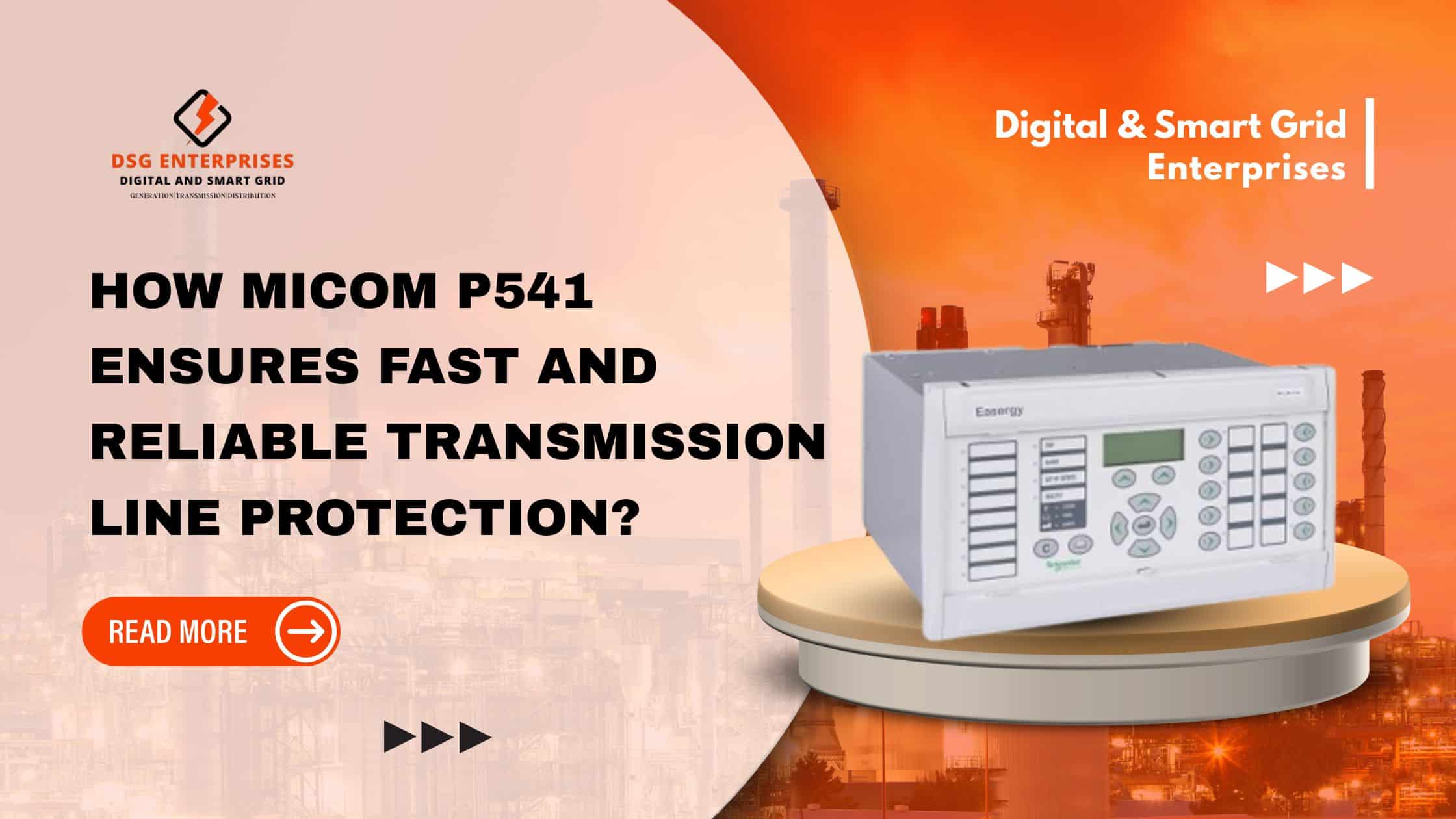
The Schneider Micom P541 Relay is a high-performance Micom P541 Line Differential Protection Relay designed to provide ultra-fast fault detection, secure tripping, and enhanced grid reliability. In this blog, we will explore how this advanced relay ensures fast and reliable transmission line protection, making it a preferred choice for utilities and industries.
Understanding the Role of Line Differential Protection
Before diving into the relay’s capabilities, it’s important to understand why line differential protection is critical.
- Primary Protection Method: Detects faults by comparing the current entering and leaving a transmission line.
- High Selectivity: Ensures only faulty sections are isolated.
- Instant Fault Detection: Eliminates delays common in traditional protection methods.
Unlike conventional overcurrent or distance protection, differential protection schemes like those used in the Micom P541 Line Differential Protection Relay provide instantaneous tripping for internal faults while maintaining stability during external faults.
What is Schneider Micom P541 Relay?
The Schneider Micom P541 Relay is part of the MiCOM P54x series, engineered specifically for overhead line and cable protection in HV, EHV, and UHV systems. It offers high-speed current differential protection combined with advanced communication and backup features.
Key Design Capabilities:
- High-speed differential protection: Ensures rapid fault detection and isolation.
- End-to-end communication support: Works seamlessly with fiber optic or multiplexed communication channels.
- Integrated backup protection: Includes distance and overcurrent functions.
- Flexible topology support: Suitable for multi-terminal and complex substation configurations.
How MiCOM P541 Ensures Fast Protection
Speed is critical in transmission line protection. Even a delay of milliseconds can cause equipment damage or grid instability.
1. True Current Differential Algorithm:
- Measures the current entering vs leaving the line.
- Detects internal faults instantly without waiting for impedance calculation.
- Ensures sub-cycle fault clearance in many scenarios.
Result: Faster than conventional distance protection systems.
2. Instantaneous Tripping Mechanism:
- Uses a proven differential vs through-current comparison.
- Trips immediately when an internal fault is detected.
- Maintains stability during external faults, avoiding false trips.
Result: High-speed protection without compromising security.
3. High-Speed Communication Channels:
- Supports:
- Fiber optic links
- Digital multiplexed communication
- Enables real-time data exchange between line terminals.
Result: Eliminates communication delays and ensures synchronized fault detection.
4. Phase-by-Phase Fault Detection:
- Identifies the exact faulty phase.
- Improves accuracy and reduces unnecessary tripping.
Result: Faster fault localization and isolation.
How MiCOM P541 Ensures Reliable Protection
Speed alone is not enough; reliability ensures the system operates correctly under all conditions.
1. High Selectivity and Stability:
- Differentiates between:
- Internal faults → Trip
- External faults → Remain stable
- Prevents nuisance tripping.
Result: Reliable operation even in complex grid conditions.
2. Integrated Backup Protection:
- Includes:
- Distance protection
- Overcurrent protection
- Automatically activates if communication fails.
Result: Continuous protection even during communication outages.
3. Multi-Terminal Line Support:
- Suitable for:
- 2-terminal systems
- 3-terminal systems
- Complex grid topologies
Result: Flexible deployment across various network configurations.
4. Advanced Communication Monitoring:
- Continuously monitors the communication channel health.
- Logs errors and ensures system integrity.
Result: Increased dependability and system transparency.
5. Robust Design for Harsh Environments:
- (resistant) to corrosive gases like H₂S and SO₂.
- Designed for industrial and outdoor substations.
Result: Long-term reliability in extreme conditions.
Additional Features That Enhance Performance
The Schneider Micom P541 Relay is more than just a protection device—it’s a complete protection and control solution.
Advanced Functionalities:
- Breaker control and monitoring: Real-time breaker status and operation.
- Event recording: Captures fault data for analysis.
- Multiple setting groups: Enables flexible configuration.
- Teleprotection support: Fast signal exchange for coordinated tripping.

Benefits of Using Micom P541 Line Differential Protection Relay
Key Advantages:
- Ultra-fast fault clearance: Minimizes damage to equipment.
- Improved grid stability: Reduces risk of cascading failures.
- Reduced downtime: Faster restoration of power supply.
- Lower operational costs: Minimizes maintenance and equipment damage.
- Enhanced safety: Protects personnel and infrastructure.
Applications of Schneider Micom P541 Relay
The Schneider Micom P541 Relay is widely used across various sectors:
Common Applications:
- Transmission lines: HV, EHV, and UHV systems.
- Underground cables: Reliable protection in urban networks.
- Industrial power systems: Manufacturing plants and heavy industries.
- Substations: Complex configurations like breaker-and-a-half schemes.
Why Choose Schneider Micom P541 Protection Relay?
When selecting a relay, decision-makers often consider performance, reliability, and cost-effectiveness.
Why It Stands Out:
- Proven technology from Schneider Electric
- Advanced differential protection scheme
- Flexible integration with modern SCADA systems
- Reduced training and maintenance requirements
- Comprehensive protection in a single device
Schneider Micom P541Protection Relay Price & Supplier
When planning your purchase, two important factors come into play:
Schneider Micom P541Protection Relay Price:
- Pricing varies based on:
- Configuration
- Communication modules
- Application requirements
- Typically considered a cost-effective solution compared to deploying multiple discrete relays.
Schneider Micom P541Protection Relay Supplier:
- Always choose:
- Authorized distributors
- Experienced suppliers
- Providers offering technical support and commissioning services
This ensures genuine products, proper configuration, and long-term reliability.
Conclusion
The Schneider Micom P541 Relay is a powerful and intelligent solution designed to meet the demands of modern transmission line protection. With its high-speed differential protection, robust communication capabilities, and integrated backup features, it ensures both fast fault clearance and reliable operation.
The Micom P541 Line Differential Protection Relay not only enhances grid stability but also reduces downtime, improves safety, and optimizes operational efficiency. Whether you are upgrading an existing system or designing a new substation, this relay provides a future-ready solution for secure and efficient power system protection.
We, Digital and Smart Grid Enterprises, are the leading Schneider Micom Relays Suppliers, traders, distributors, and exporters in Mumbai. All applications requiring overcurrent and/or earth-fault protection can benefit from the Schneider Micom Numerical Relay. MiCOM relays can be used in both medium and low-voltage applications due to their cost-effectiveness and technological qualities. Their user-friendly design delivers a comprehensive collection of measurements that are easily accessible. For Micom P541 Line Differential Protection Relay prices or product inquiries, you can reach us at +91 7021624024 or email info@dsgenterprises.in. With strong technical expertise, our team supports you at every step from selecting the right product to providing complete after-sales assistance. Explore our full range of products by clicking here for more details