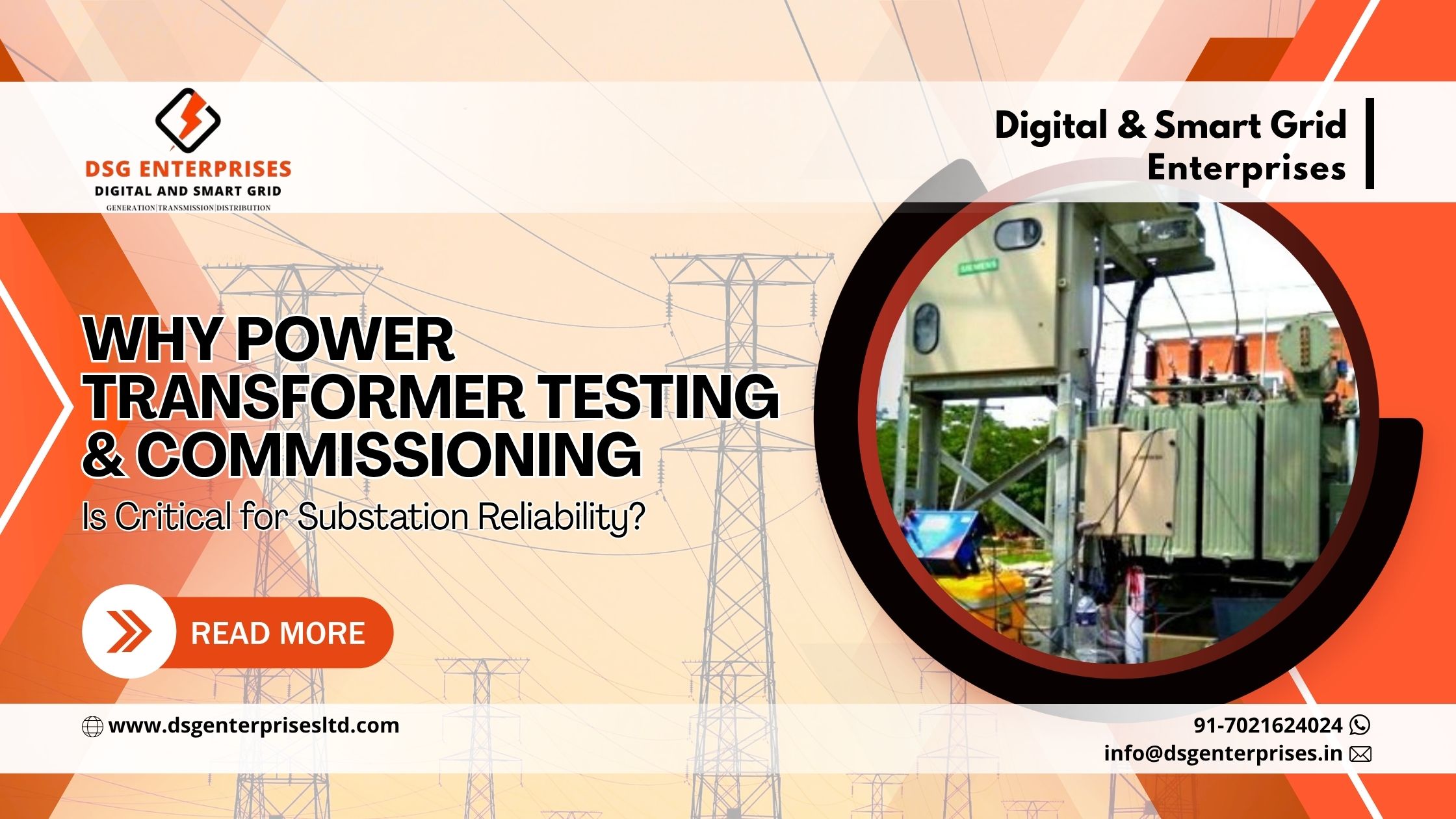
Power transformers form the backbone of electrical distribution systems worldwide. These critical devices carry the responsibility of stepping voltage up and down so that electricity reaches homes, factories, and businesses safely. However, many facility managers overlook one crucial aspect: proper power transformer testing before these machines enter service. This oversight leads to costly failures, unexpected downtime, and safety hazards that could have been prevented.
The truth is simple: you cannot afford to skip testing. Whether you manage a substation in Mumbai, a manufacturing facility in Delhi, or a utility company serving rural areas, the consequences of failure remain the same. This guide explains why power transformer commissioning matters and how it protects your infrastructure investment.
What is a Power Transformer and Commissioning?
Let me break this down in plain language. Power transformer testing refers to a series of checks and measurements performed on transformers before they operate in your substation. Think of it like a health checkup before surgery, you want to know everything works correctly beforehand.
Power transformer commissioning goes one step further. This process validates that your transformer has been installed properly, connected safely, and operates within design specifications. Together, these two processes create a comprehensive safety net.
The Difference Between Testing and Commissioning
- Testing: Examines the physical and electrical condition of the transformer itself
- Commissioning: Verifies the transformer functions correctly within your specific substation environment
Both steps work together to ensure reliability. Many industries invest in professional power transformer & commissioning services to handle these tasks efficiently and accurately.
Why Power Transformer Testing Proves Essential
Prevents Catastrophic Failures
A transformer carrying defects develops problems gradually or suddenly fails without warning. Testing catches issues before they cause blackouts affecting thousands of people. When you invest in comprehensive testing, you avoid:
- Emergency repairs that cost 10 times more than preventive maintenance
- Equipment damage spreading to other substation components
- Unplanned outages disrupting business operations
- Safety risks to technicians working on faulty equipment
Ensures Safety Compliance
Regulatory bodies across India and worldwide require rigorous testing before energizing transformers. Standards from organizations like:
- Bureau of Indian Standards (BIS)
- International Electrotechnical Commission (IEC)
- Central Electricity Authority (CEA)
These standards demand that your power transformer testing procedures meet specific technical requirements. Skipping tests violates regulations and creates legal liability.
Protects Your Investment
A new power transformer costs anywhere from hundreds of thousands to millions of rupees depending on capacity. This represents a significant capital investment. Testing protects this investment by:
- Identifying manufacturing defects before installation
- Confirming proper installation and connection
- Validating performance meets specifications
- Establishing baseline data for future condition monitoring
- Extending transformer lifespan through early problem detection
Improves System Reliability
Substations serve critical functions. When transformers fail, the entire supply chain suffers. Testing ensures:
- Continuous, uninterrupted power delivery
- Reduced downtime across your facility
- Better performance metrics for your distribution network
- Lower overall operating costs
The Critical Role of Commissioning in Reliability
Commissioning transforms testing results into real-world performance. Even if a transformer passes all factory tests, problems can occur during:
- Transportation to your site
- Installation and connection procedures
- Integration with existing substation equipment
- Initial startup phases
What Commissioning Technicians Verify
Professionals conducting power transformer commissioning checks confirm:
- Oil quality: Verifies insulation fluid meets purity standards and contains no moisture or particulates
- Winding resistance: Confirms all electrical connections maintain correct resistance values
- Polarity and phase rotation: Ensures correct phasing prevents reversed polarity issues
- No-load and load loss tests: Validates transformer efficiency and heat generation remain acceptable
- Insulation resistance: Confirms internal insulation integrity through high-voltage testing
- Temperature measurements: Checks that cooling systems function properly during operation
This comprehensive approach catches problems that basic testing misses. Therefore, investing in quality power transformer testing & commissioning services proves worthwhile.
Key Benefits of Power Transformer Testing & Commissioning Services
Benefit #1: Expert Technical Knowledge
Professional service providers bring decades of accumulated experience. They recognize subtle warning signs that untrained personnel miss. These experts:
- Understand regional electrical standards and requirements
- Possess specialized equipment for accurate measurements
- Follow best practices developed across thousands of installations
- Provide detailed documentation for compliance purposes
Benefit #2: Comprehensive Documentation
Quality power transformer testing & commissioning supplier companies deliver:
- Pre-commissioning reports: Detail baseline measurements and condition assessments
- Commissioning certificates: Official documentation proving compliance with standards
- Operation manuals: Provide guidance for your maintenance team
- Preventive maintenance schedules: Recommend future testing intervals and procedures
This documentation becomes invaluable during warranty claims, inspections, and future troubleshooting.
Benefit #3: Faster Problem Resolution
Professional testing identifies issues quickly. Rather than operating blindly and hoping for the best, you gain:
- Immediate awareness of any defects or problems
- Time to arrange repairs before commissioning completion
- Confidence that your transformer works properly from day one
- Reduced risk of surprise failures
Benefit #4: Extended Equipment Lifespan
Well-tested and properly commissioned transformers simply last longer. Quality testing prevents:
- Thermal stress from cooling system failures
- Electrical stress from polarity or phase issues
- Insulation degradation from moisture contamination
- Overload situations that damage internal components
Benefit #5: Regulatory Compliance
Regulatory bodies across different states and regions enforce testing requirements. By engaging professional power transformer testing & commissioning services, you:
- Maintain compliance with CEA regulations
- Meet state distribution company requirements
- Satisfy insurance policy conditions
- Avoid penalties and operational restrictions
Finding a Reliable Power Transformer Testing & Commissioning Supplier
Not all testing providers deliver equal quality. Consider these factors when selecting a power transformer & commissioning supplier:
Essential Qualifications
- Certifications: Look for ISO 9001, IEC 61010, and relevant industry certifications
- Experience: Choose suppliers with 10+ years handling transformers your size
- Equipment: Verify they own modern testing apparatus, not outdated gear
- Team expertise: Ask about technician training and certifications
- Track record: Request references from similar projects and installations
Select suppliers familiar with your region’s specific requirements and environmental conditions.
Common Power Transformer Parameters Explained
Oil Analysis and Moisture Testing
Transformer oil deteriorates over time and absorbs moisture. Testing measures:
- Water content (specified in PPM, parts per million)
- Acidity levels affecting insulation lifespan
- Dissolved gas concentrations indicating internal faults
- Dielectric strength confirming breakdown protection
Insulation Resistance Testing
This crucial test measures megaohms of electrical resistance:
- Between windings and ground
- Among different winding sections
- Determines if moisture or contamination has compromised insulation
- Establishes baseline for future condition monitoring
Turns Ratio Testing
This test verifies:
- Correct voltage stepping relationships
- No short circuits in windings
- Proper transformer connection and winding integrity
Thermal Imaging
Modern testing includes infrared cameras revealing:
- Hot spots indicating problem areas
- Cooling system effectiveness
- Connection quality at terminals
- Overall thermal distribution patterns
Conclusion
Power transformers operate silently in the background, often taken for granted until failure occurs. By then, damage spreads quickly throughout your substation and distribution network.
Power transformer testing and power transformer commissioning transform this situation. Rather than hoping equipment works, you gain certainty through systematic, professional verification. This investment protects.
Whether you need power transformer & commissioning services for a new installation, major upgrade, or periodic verification, professional suppliers deliver measurable value. The few thousand rupees spent on proper testing saves hundreds of thousands in emergency repairs and lost productivity. For pricing or inquiries, feel free to contact us at +91 7021624024 or email info@dsgenterprises.in. Our experienced technical team is here to guide you at every stage, from choosing the right product to ensuring reliable after-sales support. Click here to explore our complete range of products and learn more