Motors run your plant. Pumps, fans, compressors, crushers, and conveyors all depend on them. When one fails, production stops, repair bills climb, and your team loses valuable time.
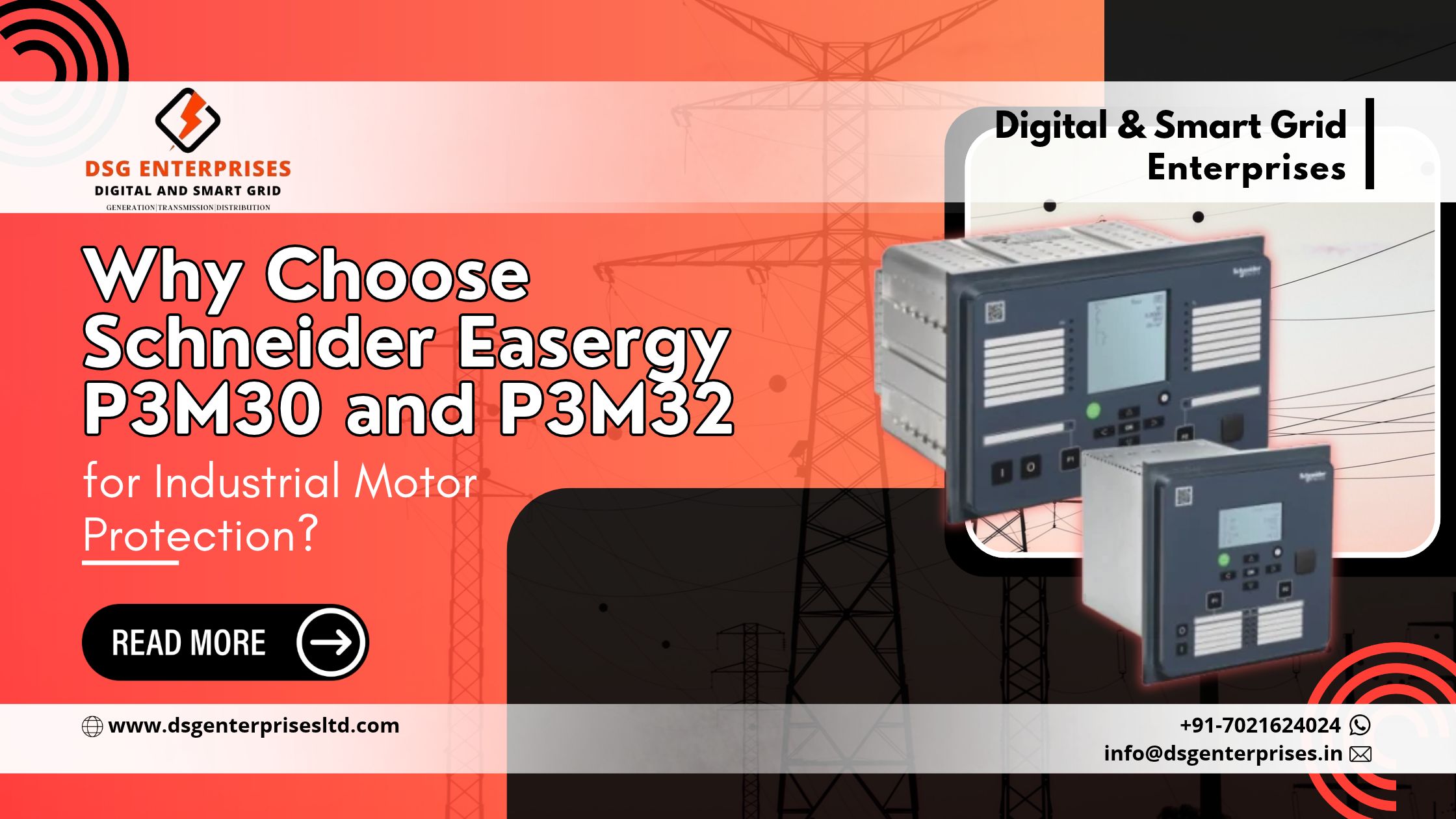
That is why a good protection device matters. The Schneider P3M30 & P3M32 Motor Relay from the Easergy P3 range give your motors smart, reliable protection. In this blog, you will learn what these relays do, how they differ, and why many plant managers trust them.
What Is the Schneider P3M30 & P3M32 Motor Protection Relay?
The Schneider P3M30 & P3M32 Motor Protection Relay is a digital relay built to guard medium and large industrial motors. It watches current, heat, and other conditions all the time. When it spots a fault, it trips the circuit before serious damage happens.
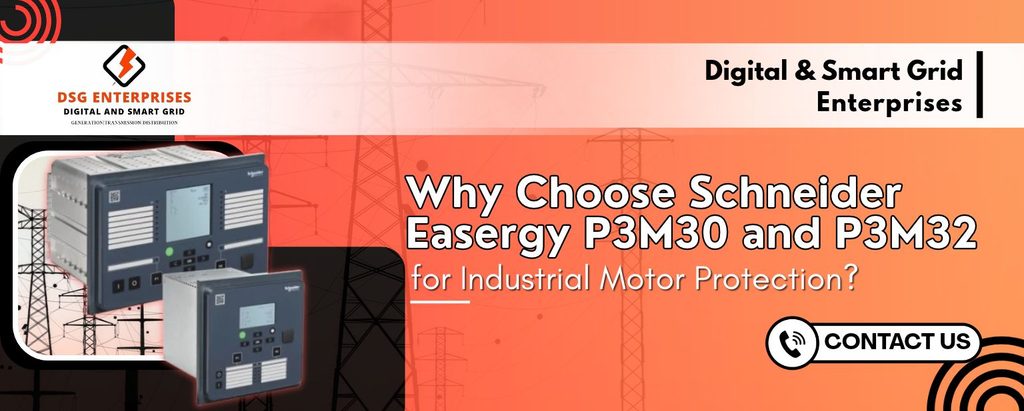
Both models belong to the Easergy P3 family. They share the same design, menu, and software. However, each model suits a slightly different need:
- P3M30: Offers complete motor protection for standard applications, including overload, start-up, and earth fault functions.
- P3M32: Adds extra capability, such as differential protection for larger or more critical motors. This helps you detect internal winding faults faster.
Simply put, the P3M30 covers the essentials, and the P3M32 gives you more depth for high-value motors.
Why Motor Protection Matters
Motors face many threats. Overloads, voltage problems, frequent starts, and stuck rotors all cause stress. Over time, this stress burns insulation and shortens motor life.
A basic thermal relay reacts slowly and gives limited information. A modern motor relay works differently. It learns the motor’s heat level, tracks every start, and records each fault. As a result, you fix problems early instead of replacing motors late.
Key Features of the Schneider P3M30 & P3M32 Motor Relay
Here is what makes these relays stand out:
- Thermal overload protection: The relay builds a thermal model of the motor, so it protects the motor even during repeated starts.
- Start-up supervision: It checks start time and blocks too many starts in a short period.
- Locked rotor and stall protection: It trips quickly when the shaft jams, which saves windings from burning.
- Current unbalance protection: It detects phase loss and uneven loads that overheat the motor.
- Earth fault protection: It senses leakage to ground and cuts power fast.
- Loss of load detection: It warns you when a pump runs dry or a belt breaks.
- Differential protection (P3M32): It finds internal short circuits quickly, which is vital for large motors.
- Event and fault recording: It stores data so your team can study what went wrong.
- Communication options: It connects to SCADA and plant systems through common industrial protocols.
- Clear display and easy setup: Engineers use the Easergy Pro software to set values, test, and copy settings across relays.
Benefits You Get From These Relays
Features sound good on paper. Benefits show the real value. Here is what you gain:
- Less downtime: Early alerts help you act before a motor trips or fails.
- Longer motor life: Accurate heat modeling keeps windings from aging too fast.
- Lower repair costs: You avoid rewinding and replacement expenses.
- Faster fault finding: Recorded data shows the cause, so you fix it quickly.
- Safer plant operation: Fast tripping reduces fire risk and protects workers.
- Easy integration: The relay fits into new panels and upgrades with little effort.
Moreover, Schneider Electric has a strong global name in electrical protection. That brand trust gives buyers extra confidence in support, spares, and long-term availability.
Where Can You Use the P3M30 and P3M32?
These relays work across many industries. Common uses include:
- Water and wastewater plants: Large pumps run all day and need steady protection.
- Cement and mining: Crushers and mills face heavy loads and frequent stalls.
- Oil, gas, and chemicals: Critical motors need dependable and fast fault detection.
- Steel and metals: Fans, blowers, and rolling-mill drives need robust protection.
- Power plants: Auxiliary motors must stay online for the whole system to run.
- Manufacturing: Compressors and conveyors keep production lines moving.
P3M30 vs P3M32: Which One Should You Choose?
The choice depends on your motor size, risk level, and budget. Use this quick guide:
- Choose P3M30 when: Your motor is small or medium, and you need strong core protection at a lower cost.
- Choose P3M32 when: Your motor is large or critical, and you want differential protection for faster internal fault detection.
If you are unsure, check the motor rating, the cost of downtime, and your plant standards. Then, ask your supplier or an application engineer to confirm the best fit.
Schneider P3M30 & P3M32 Motor Relay Price: What Affects the Cost?
Many buyers ask about the Schneider P3M30 & P3M32 motor relay price first. The honest answer is that the price changes from one order to another. Several factors play a role:
- Model choice: The P3M32 usually costs more than the P3M30 because it offers extra protection.
- Options and add-ons: Communication ports, extra I/O, and special modules change the final quote.
- Order quantity: Bulk orders often earn better rates.
- Taxes and duties: Local taxes and freight add to the total.
- Market conditions: Currency rates and supply levels can shift prices.
For an accurate figure, request a written quote with the exact part number. Do not judge the relay by price alone. A slightly higher price often saves far more money by preventing one motor failure.
How to Pick a Trusted Schneider P3M30 & P3M32 Motor Relay Supplier
A good product needs a good seller. When you look for a Schneider P3M30 & P3M32 Motor Relay Supplier, check these points:
- Authorized status: Choose an authorized Schneider Electric channel partner to avoid fake or old stock.
- Genuine products with warranty: Ask for original packaging, serial numbers, and warranty papers.
- Technical support: Pick a supplier whose team can help with selection, settings, and commissioning.
- Stock and delivery time: Fast delivery reduces project delays.
- Clear quotes: A trusted supplier lists the part number, price, taxes, and lead time without hidden charges.
- After-sales service: Look for help with repairs, spares, and firmware questions.
In addition, read customer reviews and ask for references from similar projects. This simple step builds confidence before you place an order.
Tips for Getting the Best Results
After you buy, follow these steps to get full value from your relay:
- Set values carefully: Use the motor nameplate data and the manufacturer’s guidance.
- Test before commissioning: Run injection tests to confirm every protection works.
- Review records often: Check event logs monthly to spot early warning signs.
- Train your team: Skilled technicians handle faults faster and make fewer errors.
- Update firmware when needed: Updates keep your relay secure and reliable.
Conclusion
Motor failures cost money, time, and peace of mind. The Schneider P3M30 & P3M32 Motor Protection Relay helps you avoid those problems with smart, fast, and dependable protection. The P3M30 suits standard motors, while the P3M32 gives extra security for large and critical machines.
So, start by matching the relay to your motor. Then, compare quotes and choose a reliable supplier who offers genuine products and real support. With the right relay and the right partner, your motors run longer, and your plant runs smoother. For pricing or inquiries, feel free to contact us at +91 7021624024 or email info@dsgenterprises.in. Our experienced technical team is here to guide you at every stage, from choosing the right product to ensuring reliable after-sales support. Click here to explore our complete range of products and learn more