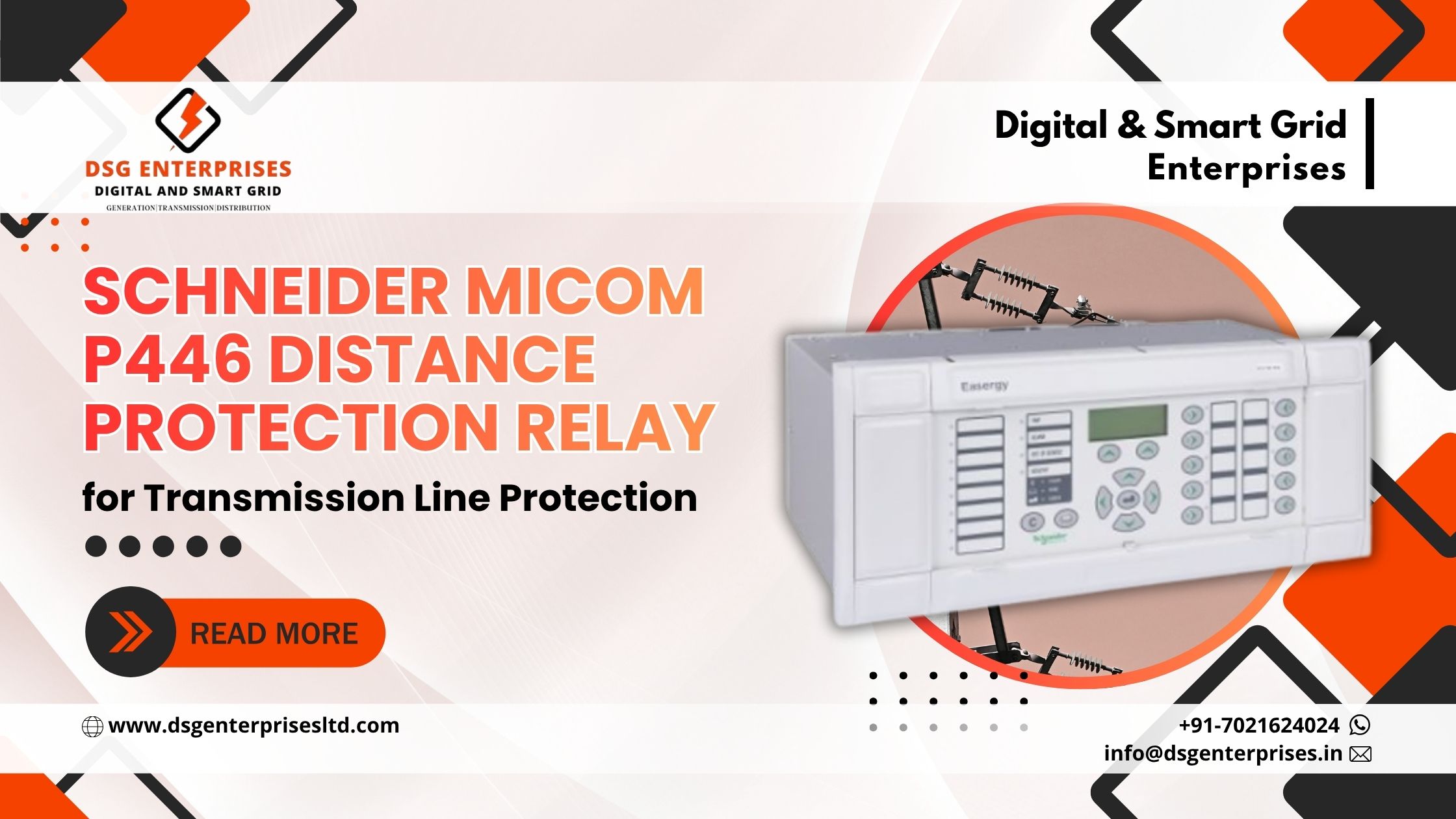
A transmission line fault can shut down a whole network in seconds. That is why utilities and industrial plants need a fast, reliable relay on every critical line. The Schneider MiCOM P446 Relay is one such device. It is built to detect faults quickly, isolate the faulty section, and keep the rest of the grid running.
In this guide, we explain what the relay does, how it works, where you can use it, and what to check before you buy. We keep the language simple, so engineers and buyers can both follow along.
What Is the Schneider MiCOM P446 Relay?
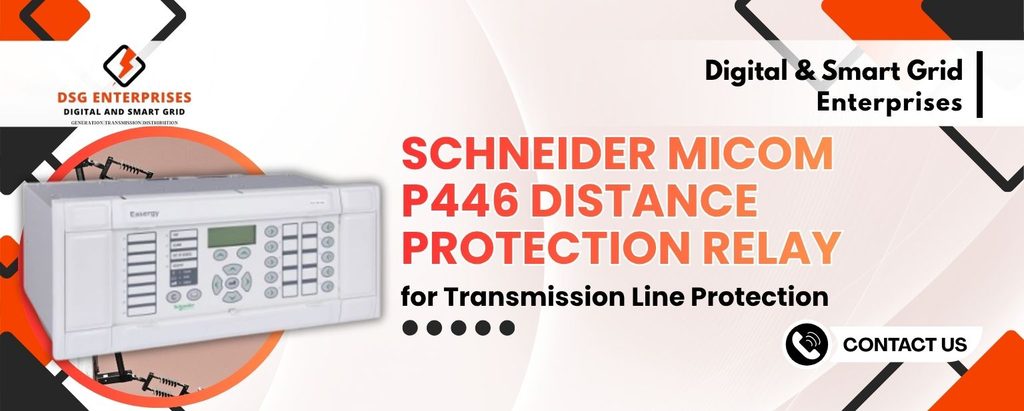
The Schneider MiCOM P446 Relay belongs to the MiCOM P40 Agile family of numerical protection relays. It protects overhead lines and underground cables at transmission and sub-transmission voltage levels. The relay measures voltage and current, calculates impedance, and trips the circuit breaker when a fault appears inside its protected zone.
Engineers often call it a distance relay because it measures the electrical “distance” to a fault. It does this by comparing voltage and current. If the measured impedance falls inside a set zone, the relay acts.
How the Schneider MiCOM P446 Distance Protection Relay Works
The Schneider MiCOM P446 Distance Protection Relay follows a simple idea. A fault close to the relay causes a low impedance reading. A fault far away causes a higher reading. The relay uses this difference to decide how fast to trip.
Here is the basic process:
- Measurement: The relay samples current and voltage from the line’s instrument transformers.
- Calculation: It converts those samples into an impedance value in real time.
- Zone check: It compares the impedance against several settable protection zones.
- Decision: It trips instantly for faults in Zone 1 and uses time delays for farther zones.
- Action: It sends a trip command to the circuit breaker and records the event.
As a result, the relay clears nearby faults fast and still gives backup protection for faults further down the line.
Key Features of the Schneider MiCOM P446 Relay
Please confirm the exact feature list with the official Schneider Electric datasheet for your model and firmware version. In general, relays in this class offer the following:
- Multiple distance zones: You can set several forward and reverse zones for primary and backup protection.
- Flexible characteristics: The relay supports common distance characteristics, so you can match the setting to your line type.
- Fast operation: Numerical processing helps the relay detect and clear faults in very short times.
- Auto-reclose function: The relay can reclose the breaker after a temporary fault, which restores supply quickly.
- Fault locator: It estimates where the fault happened, so crews can reach the spot sooner.
- Disturbance recording: It stores fault data that you can study after an event.
- Communication options: It supports standard protocols used in modern substations, such as IEC 61850 and others, depending on the hardware option.
- Self-monitoring: The relay checks its own health and raises an alarm if something goes wrong.
Why Transmission Line Protection Matters
Transmission lines carry large amounts of power over long distances. They also face lightning, storms, tree contact, and equipment ageing. Therefore, faults happen more often than most people expect.
Without proper protection, a single fault can:
- Damage equipment: Heavy fault current can harm conductors, transformers, and breakers.
- Cause blackouts: A slow trip can spread the fault and affect many customers.
- Risk safety: Prolonged faults put crews and the public at risk.
- Raise costs: Outages cost money in lost production and repair work.
A well-set distance relay reduces all of these risks. Moreover, it gives operators clear data to improve the network over time.
Benefits of Using the Schneider MiCOM P446 Relay
Utilities and plants choose this relay for several practical reasons:
- High reliability: Schneider designs the MiCOM range for harsh substation conditions.
- Fast fault clearing: Quick trips limit damage and protect system stability.
- Better selectivity: Only the faulty section trips, so healthy parts stay live.
- Easier maintenance: Event records and self-checks save time during testing.
- Future-ready design: Digital communication fits smart substation upgrades.
- Familiar platform: Many engineers already know MiCOM settings software, which shortens training time.
Where You Can Use This Relay
You can apply the relay in many settings. Common uses include:
- High-voltage transmission lines: It serves as the main protection on long overhead lines.
- Underground cable circuits: It protects short, high-capacity cable links.
- Parallel and double-circuit lines: Its settings help handle mutual coupling effects.
- Utility substations: It supports grid operators who need dependable line protection.
- Industrial networks: Large plants, such as steel, cement, and oil and gas, use it on their incoming and tie lines.
- Renewable energy projects: Wind and solar farms use it on the lines that connect them to the grid.
Tips for Setting and Commissioning
A good relay still needs good settings. Follow these steps for the best results:
- Collect accurate line data: Get correct line length, impedance, and CT/VT ratios before you start.
- Run a short-circuit study: This helps you choose zone reaches and time delays.
- Check zone coordination: Make sure your Zone 2 and Zone 3 settings work with the neighbouring relays.
- Test every function: Use a secondary injection test kit to confirm trip, reclose, and alarm logic.
- Back up your settings: Save a copy of the final settings file and keep it safe.
In addition, plan regular tests. Routine checks catch small problems before they become big ones.
How to Choose a Schneider MiCOM P446 Protection Relay Supplier
Buying the relay is only half the job. The right partner matters just as much. When you look for a Schneider MiCOM P446 Protection Relay Supplier, check these points:
- Genuine products: Ask for original relays with proper packaging, serial numbers, and documents.
- Technical support: Choose a supplier whose team can help with model selection, settings, and troubleshooting.
- Stock and delivery: A supplier with ready stock helps you avoid long shutdowns.
- Clear pricing: Request a written quotation that lists the model, options, and lead time.
- Warranty and after-sales service: Confirm what the warranty covers and who handles repairs.
- Industry experience: A supplier who has served power utilities and industrial clients will understand your needs.
Before you place an order, share your voltage level, CT/VT details, communication needs, and auxiliary supply rating. As a result, your supplier can confirm the correct order code the first time.
Conclusion
The Schneider MiCOM P446 Relay gives transmission networks fast, selective, and dependable protection. Its distance zones, fault recording, and communication options help operators clear faults quickly and restore power with less delay. Pair it with careful settings and regular testing, and it will serve your network for many years.
If you plan a new project or an upgrade, talk to a trusted Schneider MiCOM P446 Protection Relay Supplier early. Share your technical details, ask for a clear quotation, and confirm the support you will receive after purchase.
We, Digital and Smart Grid Enterprises are the leading Schneider Micom Relays Suppliers, traders, Distributors and exporters in Mumbai. All applications requiring over-current and/or earth-fault protection can benefit from the Schneider Micom Numerical Relay. MiCOM relays can be used in both medium and low-voltage applications due to their cost-effectiveness and technological qualities. Their user-friendly design delivers a comprehensive collection of measurements that are easily accessible. For pricing or inquiries, feel free to contact us at +91 7021624024 or email info@dsgenterprises.in. Our experienced technical team is here to guide you at every stage, from choosing the right product to ensuring reliable after-sales support. Click here to explore our complete range of products and learn more


