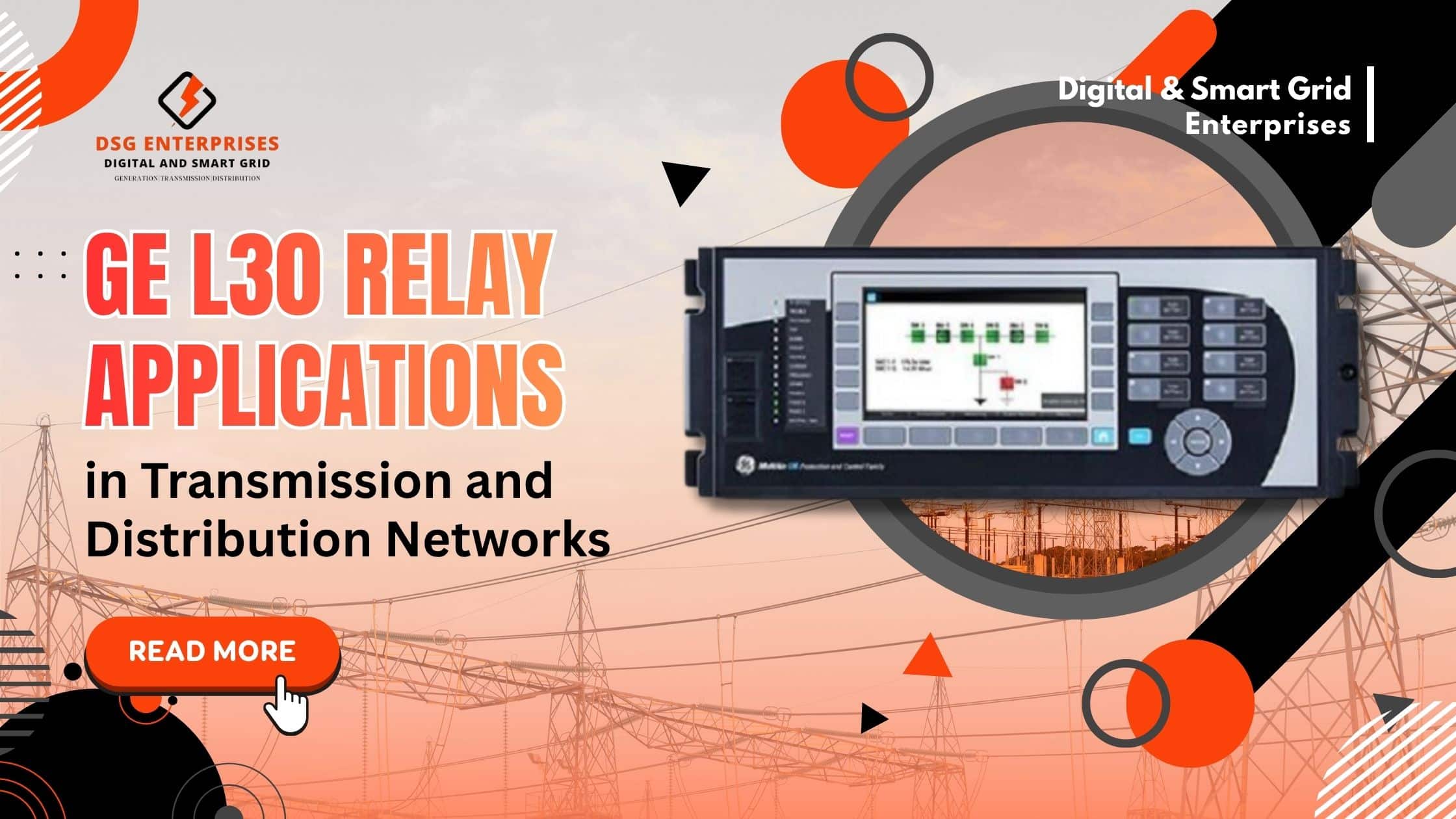
Did you know that a single uncleared fault on a high-voltage transmission line can damage transformers worth crores and black out entire regions? Transmission and distribution protection is the last line of defense between a functioning power grid and catastrophic equipment failure. That is why engineers across the world rely on the GE Multilin L30 Relay a purpose-built line current differential relay trusted in some of the world’s most critical power networks.
The GE L30 Relay belongs to the Universal Relay (UR) family from GE Grid Solutions. It is engineered specifically for the protection of high-voltage and extra-high-voltage transmission lines. Furthermore, it supports both two-terminal and multi-terminal line configurations, making it a highly flexible solution for complex network topologies.
What Is the GE Multilin L30 Relay?
The GE Multilin L30 Relay is a numerical line current differential protection relay. It is part of GE’s UR (Universal Relay) series, a family of advanced protection devices built on a common hardware and software platform. Therefore, it offers consistent engineering; familiar interfaces; and shared spare parts across a broad relay family.
The relay is designed to provide primary and backup protection for transmission lines, EHV cables, and series-compensated lines. In addition, it integrates current differential protection with distance protection backup, offering a complete protection scheme in one unit. Key specifications include:
- Supports current differential protection for two-terminal and three-terminal line configurations
- Integrated distance protection (21) as backup; covers Phase and Ground distance elements
- Directional overcurrent protection (67/67N) for additional backup coverage
- Auto-reclosing (79) with single-pole and three-pole reclosing capability
- IEC 61850 Edition 2 compliant; supports GOOSE and MMS communication
- Wide operating temperature range; suitable for substation panel and rack-mount installations
Hence the GE L30 Relay communicates with the remote end relay via a dedicated fiber optic or Ethernet channel. This enables accurate differential current comparison between both ends of the protected line.
How the GE L30 Relay Works in Transmission Networks
Transmission networks carry bulk electrical power over long distances at high voltages. Faults on these lines, whether caused by lightning, conductor failure, or insulation breakdown, must be cleared within tens of milliseconds. Therefore the GE Multilin L30 Relay handles this with its current differential protection principle.
The relay measures current phasors at both ends of the protected line. It then transmits these measurements over a high-speed communication channel to the relay at the other end. The differential current, the vector difference between the two measured values, is continuously computed. If this differential exceeds the set threshold, the relay trips both circuit breakers simultaneously. In addition the key features that make this effective in transmission networks include:
- Phase-segregated current differential; provides sensitive fault detection for all fault types
- GPS-based or channel-delay compensation synchronisation; ensures accurate phasor comparison across long distances
- High-speed tripping; fault clearance in as little as 15–20 milliseconds
- Series compensation tolerance; handles voltage inversion and apparent impedance issues on compensated lines These capabilities make the L30 Relay one of the most dependable choices for protecting 110 kV, 220 kV, and 400 kV transmission corridors.
Applications in Distribution Networks
While transmission protection is the primary design focus, the GE Multilin L30 Relay also finds important roles in distribution network applications. Modern distribution systems, especially those with embedded generation and ring-main configurations, require the same level of selectivity and speed as transmission networks.
Furthermore, as renewable energy sources connect at the distribution level, differential protection becomes increasingly necessary. As a result distribution network applications for the GE L30 Relay includes:
- Sub-transmission line protection at 33 kV and 66 kV voltage levels, where fast fault clearance is critical
- Ring-main feeder protection, where bi-directional power flow makes overcurrent protection unreliable
- Dedicated protection for long HV underground cable circuits in urban distribution networks
- Protection of tie-lines between industrial plant substations and the utility grid
- Feeder protection for wind farm and solar plant grid connection lines
Key Protection and Automation Functions
One of the key advantages of the GE Multilin L30 Relay is its ability to combine multiple protection and automation functions in a single unit. In addition traditional schemes required separate relays for differential protection, distance backup, and auto-reclosing. As a result the L30 integrates these functions, reducing panel space, wiring complexity, and maintenance effort.
Therefore the GE Multilin L30 Relay Manual helps engineers understand protection settings, logic diagrams, I/O configuration, and communication setup. Commissioning teams use the manual to configure relay parameters correctly before energization.
Key functions include:
- Current differential protection (87L) with trip times below 20 ms
- Distance protection (21/21N) with zone 1, 2, and 3 backup coverage
- Directional overcurrent protection (67/67N) for evolving fault conditions
- Breaker failure protection (50BF) for backup tripping
- Power swing detection (78) to avoid unwanted tripping
- Auto-reclosing (79) for single-pole and three-pole reclosing
- Synchrocheck (25) for safe reclosing verification
Communication, Integration, and IEC 61850 Support
Modern power system protection depends on fast and reliable communication between relays, RTUs, and SCADA systems. As a result the GE Multilin L30 Relay supports a broad range of communication standards. Therefore, it integrates smoothly into both legacy substations and fully digital IEC 61850 substations.
The relay’s communication architecture is designed for redundancy and flexibility. As a result, project engineers have multiple options for connecting the L30 into their substation automation and control infrastructure:
- IEC 61850 GOOSE messaging enables hardwire-free trip and interlock signals between bay devices
- IEC 61850 MMS supports engineering; configuration; and real-time data access via standard tools
- DNP3 and Modbus protocols; ensures compatibility with existing SCADA and DMS platforms
- IRIG-B and IEEE 1588 PTP time synchronization: provides precise time stamping for fault records
These communication features are fully documented in the GE Multilin L30 Relay Manual, making configuration and integration straightforward for experienced protection engineers.
GE Multilin L30 Relay Price and Supplier Guidance
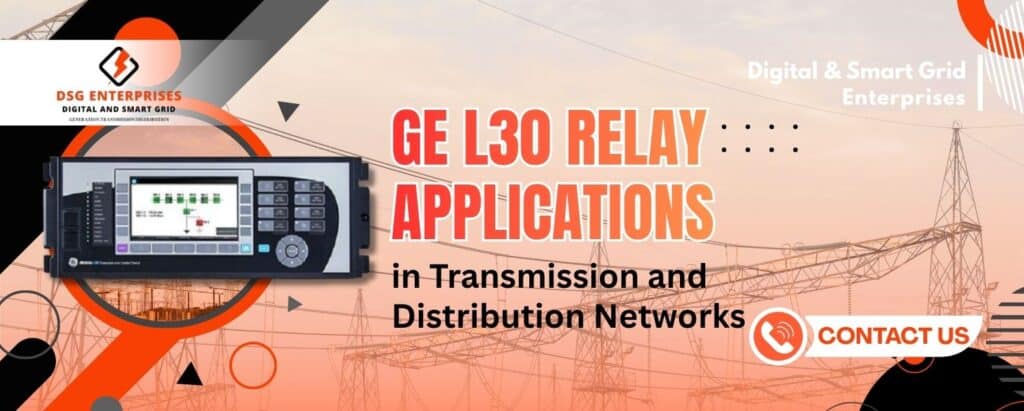
For procurement teams and project engineers planning their protection system budgets, understanding the GE Multilin L30 Relay Price is an important first step. The final price depends on several factors; these include the hardware variant ordered, the number of I/O modules required; the communication interfaces selected; and the overall project quantity. Therefore, always request a formal quotation from an authorized GE Grid Solutions supplier.
Factors that influence the GE Multilin L30 Relay price include:
- Number and type of analogue input modules (CT and VT inputs)
- Communication interface modules: fibre optic or copper Ethernet
- Authorised GE Grid Solutions distributor status; ensures product authenticity and manufacturer warranty
- In-house technical team with EnerVista software expertise; critical for correct relay configuration
- Local spare parts stock availability reduces downtime in the event of a field replacement
- Proven track record in transmission and distribution protection projects
Conclusion
The GE Multilin L30 Relay stands out as one of the most technically capable and field-proven line current differential relays available today. Its combination of high-speed differential protection; comprehensive backup functions; flexible communication; and compatibility with modern IEC 61850 substations makes it an ideal choice for both transmission and distribution network protection. Whether you are protecting a 400 kV inter-regional tie line or a 66 kV wind farm feeder, the L30 Relay delivers the speed, selectivity, and reliability your network demands.
If you are planning a new substation project, upgrading an aging protection system, or replacing end-of-life relays, now is the right time to evaluate the Multilin L30 Relay for your application. Reach out to an authorized GE Multilin L30 Relay supplier partner for accurate pricing, application engineering support, and access to the full GE Multilin L30 Relay Manual and commissioning documentation. Investing in the right line protection relay today protects your infrastructure; reduces fault damage; and keeps your power network operating reliably for decades ahead.
At Digital & Smart Grid Enterprises, we deliver reliable transmission and distribution protection solutions with the GE L30 Relay, designed for efficient line current differential protection and enhanced network stability. With advanced communication features, fast fault detection, and dependable performance, the GE L30 Relay supports secure and uninterrupted operation across modern power systems. Click here to inquire about the latest GE Multilin L30 Relay price or discuss your transmission and distribution protection requirements. Contact us at +91 7021624024 or email info@dsgeneterprises.in
Strengthen your power network reliability with expert guidance; connect with our protection specialists today.