Modern electrical power systems need reliable protection to keep equipment safe and the power supply stable. Feeder faults can happen without warning because of short circuits, overloads, earth faults, equipment failures, or changing system conditions. If a fault remains undetected, it can damage cables, transformers, motors, switchgear, and other important equipment.
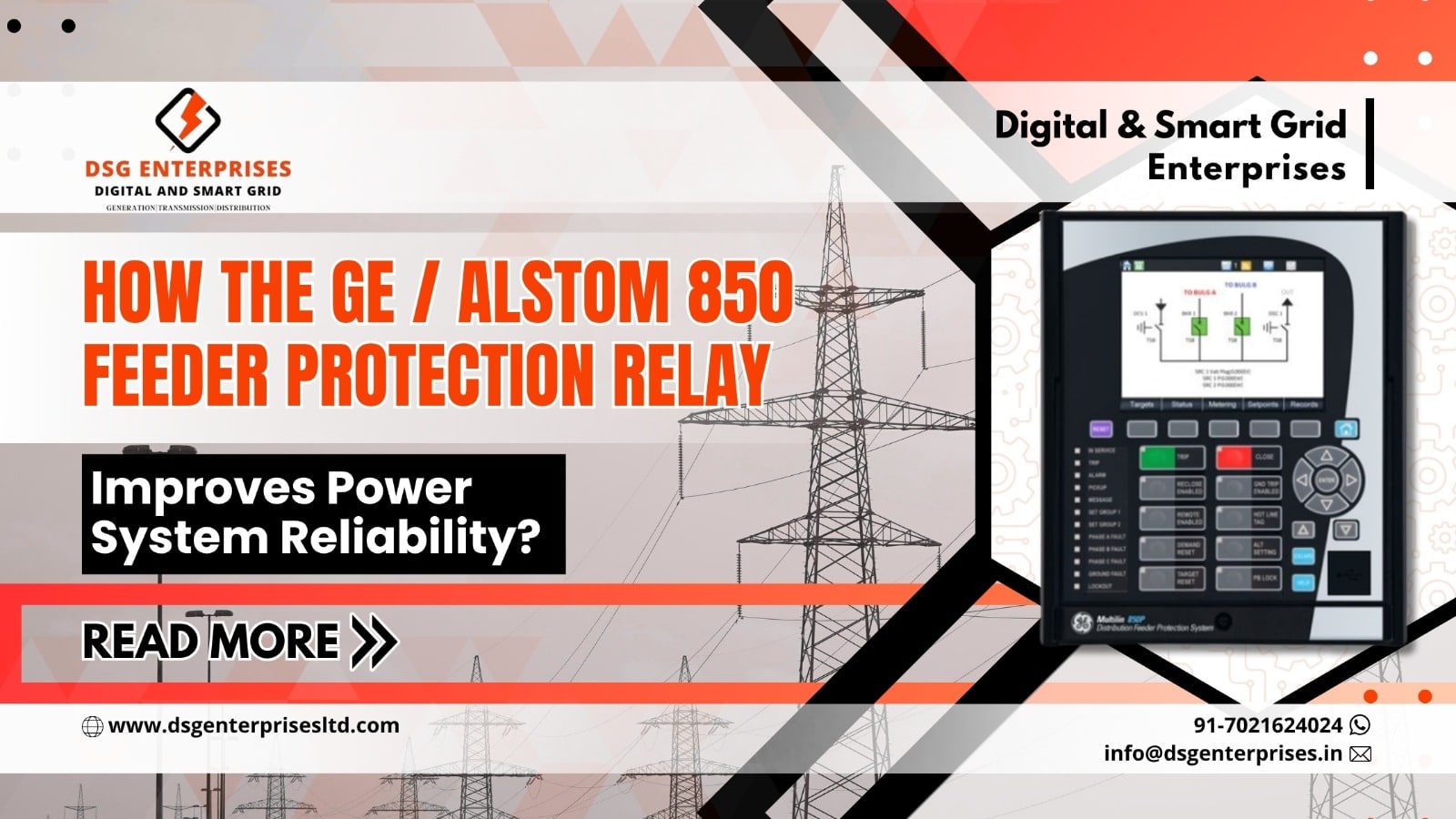
This is where the GE 850 Feeder Relay plays an important role. Designed for feeder protection and control applications, the relay helps electrical teams detect abnormal conditions quickly and take appropriate action. It combines protection, monitoring, control, and communication features in one platform.
For utilities, industrial plants, substations, and infrastructure projects, choosing the right protection relay can improve system availability and reduce the impact of electrical faults.
What Is the GE 850 Feeder Relay?
The GE 850 Feeder Relay is a multifunction protection and control relay designed for medium-voltage and industrial feeder applications. It monitors electrical parameters and identifies abnormal operating conditions.
The relay can support protection functions required for different feeder configurations. Depending on the application and configuration, it can help detect conditions such as overcurrent, ground faults, voltage abnormalities, and other system problems.
Instead of depending on separate devices for every protection and monitoring function, engineers can use the relay as part of an integrated protection and control system.
Key capabilities include:
- Feeder protection: Helps detect electrical faults and initiate circuit breaker tripping when required.
- Overcurrent protection: Detects excessive current caused by faults or abnormal loading.
- Ground-fault protection: Helps identify unwanted current flowing to ground.
- Measurement: Provides important electrical measurements for operators and engineers.
- Event recording: Captures useful information about system events and disturbances.
- Control functions: Supports feeder control and breaker-related applications.
- Communication: Can integrate with automation and supervisory systems through supported communication options.
- Monitoring: Helps operators understand feeder conditions and system performance.
Therefore, the relay can become an important part of a modern protection and automation system.
Why Is Feeder Protection Important?
Feeders carry electrical power from substations or distribution systems to loads. A fault on a feeder can affect a large part of an electrical network.
For example, a short circuit can create a very high current within a short period. If the protection system does not respond correctly, the fault can spread or cause serious equipment damage.
Effective feeder protection provides several benefits:
- Fast fault detection: Identifies abnormal electrical conditions quickly.
- Selective protection: Helps isolate the affected section while keeping healthy sections energized.
- Equipment protection: Reduces the risk of damage to switchgear, cables, transformers, and other equipment.
- System stability: Helps limit the impact of faults on the wider power network.
- Reduced downtime: Faster fault isolation can support quicker restoration.
- Better troubleshooting: Recorded events and measurements help engineers investigate problems.
As a result, feeder protection directly supports power system reliability.
How Does the GE 850 Feeder Relay Improve Power System Reliability?
The main purpose of a protection relay is not simply to trip a breaker. A modern relay also helps engineers understand the electrical system, identify faults, and improve operational decisions.
Here are some important ways the GE 850 Feeder Protection Relay can support reliability.
1. Detects Faults Quickly
Electrical faults can develop rapidly. A protection relay continuously monitors system conditions and compares them with configured protection settings.
When the relay identifies a condition that meets the required protection criteria, it can issue a trip command to the associated circuit breaker. This fast response helps reduce the duration of fault current.
Reliability benefits:
- Limits fault exposure.
- Protects electrical equipment.
- Reduces stress on switchgear.
- Helps isolate faulty feeders.
- Supports safer system operation.
2. Provides Overcurrent Protection
Overcurrent is one of the most common problems in electrical distribution systems. It can result from short circuits, equipment failures, or excessive loading.
The GE 850 Feeder Relay can provide overcurrent protection based on the application and configured protection scheme. Engineers can coordinate protection settings with upstream and downstream devices to help ensure that the correct protective device operates during a fault.
This coordination is important because unnecessary tripping can interrupt healthy parts of the network.
3. Supports Ground-Fault Protection
Ground faults can occur when an energized conductor comes into contact with ground or grounded equipment.
These faults can create dangerous current levels and may damage equipment if protection does not operate correctly. Ground-fault protection helps identify these conditions and supports the isolation of the affected circuit.
Why it matters:
- Improves electrical safety.
- Reduces equipment damage.
- Helps isolate ground faults.
- Supports reliable feeder operation.
- Provides useful fault information for troubleshooting.
4. Helps Reduce Unnecessary Outages
Not every electrical problem should result in a large-scale shutdown. A well-designed protection system uses coordination between relays, circuit breakers, and other protection devices.
The goal is to isolate the smallest practical portion of the network affected by the fault. The GE 850 Feeder Relay can contribute to this protection philosophy when engineers configure and coordinate it correctly.
For industrial facilities, this can be especially valuable. A single feeder trip should not unnecessarily shut down an entire production process.
5. Provides Useful Electrical Measurements
Protection and reliability teams need accurate information about the electrical system. A modern feeder relay can provide measurements that help operators understand current system conditions.
These measurements can support:
- Load monitoring.
- Feeder performance analysis.
- Electrical troubleshooting.
- Maintenance planning.
- System studies.
- Operational decision-making.
Consequently, the relay becomes more than a fault-tripping device. It also becomes a source of useful operational information.
6. Supports Event and Fault Analysis
Finding the cause of a trip is important after an electrical fault. Without useful fault information, engineers may spend significant time inspecting equipment and trying to reconstruct what happened.
The GE 850 Feeder Protection Relay provides event and disturbance-related information that can assist engineers in analyzing system events, depending on the relay configuration and available recording functions.
This information can help answer questions such as:
- What happened before the trip?
- Which protection function operated?
- When did the fault occur?
- How did electrical parameters change?
- Which feeder experienced the problem?
Better information can lead to faster troubleshooting and improved maintenance decisions.
GE 850 Feeder Relay for Industrial Power Systems
Industrial facilities often depend on continuous electrical power. Manufacturing plants, process industries, commercial facilities, and infrastructure sites may operate large electrical networks with multiple feeders.
A feeder failure can interrupt production and create high operational costs. The GE 850 Feeder Relay can support industrial protection applications by combining protection, monitoring, control, and communication capabilities.
Typical applications may include:
- Industrial distribution feeders.
- Utility substations.
- Medium-voltage switchgear.
- Industrial plants.
- Commercial electrical systems.
- Infrastructure projects.
- Critical power distribution systems.
However, engineers should always select relay functions and settings according to the actual system design, voltage level, fault levels, CT/VT configuration, protection philosophy, and applicable standards.
Communication and Power System Automation
Modern substations increasingly use digital communication and automation. Protection relays can communicate with supervisory and control systems to provide information about equipment status, measurements, alarms, and events.
This capability can help operators monitor electrical networks from centralized systems.
Automation advantages:
- Remote monitoring: Operators can view feeder conditions without physically inspecting every panel.
- Data availability: Electrical information becomes easier to access.
- Faster troubleshooting: Event information can support fault investigation.
- System integration: Protection devices can become part of wider automation architectures.
- Operational visibility: Engineers gain better insight into feeder performance.
For larger electrical networks, this integration can improve both operational efficiency and maintenance planning.
How to Select a GE 850 Protection Relay Supplier
Choosing the correct GE 850 Protection Relay Supplier is important because relay selection is only one part of a successful protection project.
A reliable supplier should understand the technical requirements of the application and provide suitable engineering support.
Before selecting a supplier, consider:
- Product knowledge: Does the supplier understand feeder protection applications?
- Technical support: Can the supplier help with relay selection and configuration?
- Engineering capability: Can the team support protection and control requirements?
- Testing support: Can they assist with testing and commissioning?
- Documentation: Do they provide proper technical documentation?
- After-sales service: Can they support troubleshooting and maintenance?
- Project experience: Do they have experience with industrial or utility protection systems?
A technically capable supplier can help reduce installation and commissioning challenges.
What Determines GE 850 Protection Relay Price?
The GE 850 Protection Relay Price can vary depending on the specific configuration, required functions, communication options, accessories, project requirements, and supplier.
Therefore, buyers should avoid comparing prices based only on the basic relay model. Consider the complete project requirements instead.
Factors that can affect pricing include:
- Relay configuration.
- Required protection functions.
- Communication interfaces.
- Accessories and mounting requirements.
- Engineering and configuration services.
- Testing and commissioning.
- Quantity required.
- Project-specific documentation.
- Warranty and after-sales support.
A lower initial price does not always mean lower total project cost. Technical support, commissioning quality, reliability, and long-term service can also influence the overall value.
GE 850 Feeder Relay vs. Traditional Protection Approach
Traditional protection systems may use several separate devices for protection, measurement, control, and monitoring.
A modern multifunction relay can combine many of these requirements within one platform.
Traditional approach:
- Multiple individual protection devices.
- Separate monitoring equipment.
- More wiring.
- More panel space.
- More individual components to maintain.
Modern relay approach:
- Integrated protection functions.
- Electrical measurement.
- Event information.
- Control capabilities.
- Communication with automation systems.
- More centralized information.
As a result, a multifunction feeder relay can help simplify protection system design when properly engineered.
Why Proper Relay Configuration Matters
Even a high-quality protection relay cannot deliver reliable protection if engineers configure it incorrectly.
Protection settings must match the electrical network and protection philosophy.
Engineers should consider:
- Fault current calculations.
- Load current.
- CT characteristics.
- Feeder characteristics.
- Breaker operating time.
- Coordination with upstream protection.
- Coordination with downstream protection.
- Required protection functions.
- System grounding arrangement.
- Communication requirements.
Testing should also verify that the relay operates correctly before the system enters service.
This is why experienced protection engineers and qualified commissioning teams play an important role in achieving reliable system performance.
Maintenance and Long-Term Reliability
Installing a protection relay is only the beginning. Regular maintenance helps ensure that the protection system remains dependable throughout its operating life.
Maintenance programs can include:
- Checking relay health and alarms.
- Reviewing event records.
- Verifying protection settings.
- Inspecting wiring and connections.
- Testing breaker trip circuits.
- Performing secondary injection testing when required.
- Reviewing communication performance.
- Updating documentation after system changes.
Regular testing can identify potential issues before they become major problems.
Frequently Asked Questions About the GE 850 Feeder Relay
What is the GE 850 Feeder Relay used for?
The GE 850 Feeder Relay is used for feeder protection, control, monitoring, and related power system applications. It can help detect electrical faults and support selective isolation of affected circuits.
What types of faults can feeder protection detect?
Depending on the application and configured functions, feeder protection can address conditions such as phase overcurrent, ground faults, and other abnormal electrical conditions.
Why is feeder protection important?
Feeder protection helps isolate electrical faults quickly. This can reduce equipment damage, limit service interruptions, and improve overall power system reliability.
How do I choose a GE 850 Protection Relay Supplier?
Look for a supplier with strong product knowledge, protection engineering experience, testing and commissioning capabilities, technical support, and dependable after-sales service.
What affects GE 850 Protection Relay Price?
The price depends on factors such as relay configuration, protection requirements, communication options, accessories, quantity, engineering services, testing, and project-specific requirements.
Conclusion
Reliable electrical distribution requires more than circuit breakers and cables. It requires a coordinated protection system that can detect faults, isolate affected equipment, provide useful information, and support faster recovery.
Moreover, proper engineering is essential. Correct relay selection, protection coordination, configuration, testing, and commissioning determine how effectively the system responds to real-world faults.
We, Digital and Smart Grid Enterprises, are the leading GE Feeder Protection Relay Suppliers, traders, and exporters in Mumbai. For optimal system reliability, GE’s distribution feeder protection systems combine superior protection with flexibility, programmability, and communications. They have highly skilled engineers and technicians who are familiar with the concepts of overhead and underground distribution feeders, as well as the origins of problems. For pricing or inquiries, feel free to contact us at +91 7021624024 or email info@dsgenterprises.in. Our experienced technical team is here to guide you at every stage, from choosing the right product to ensuring reliable after-sales support. Click here to explore our complete range of products and learn more