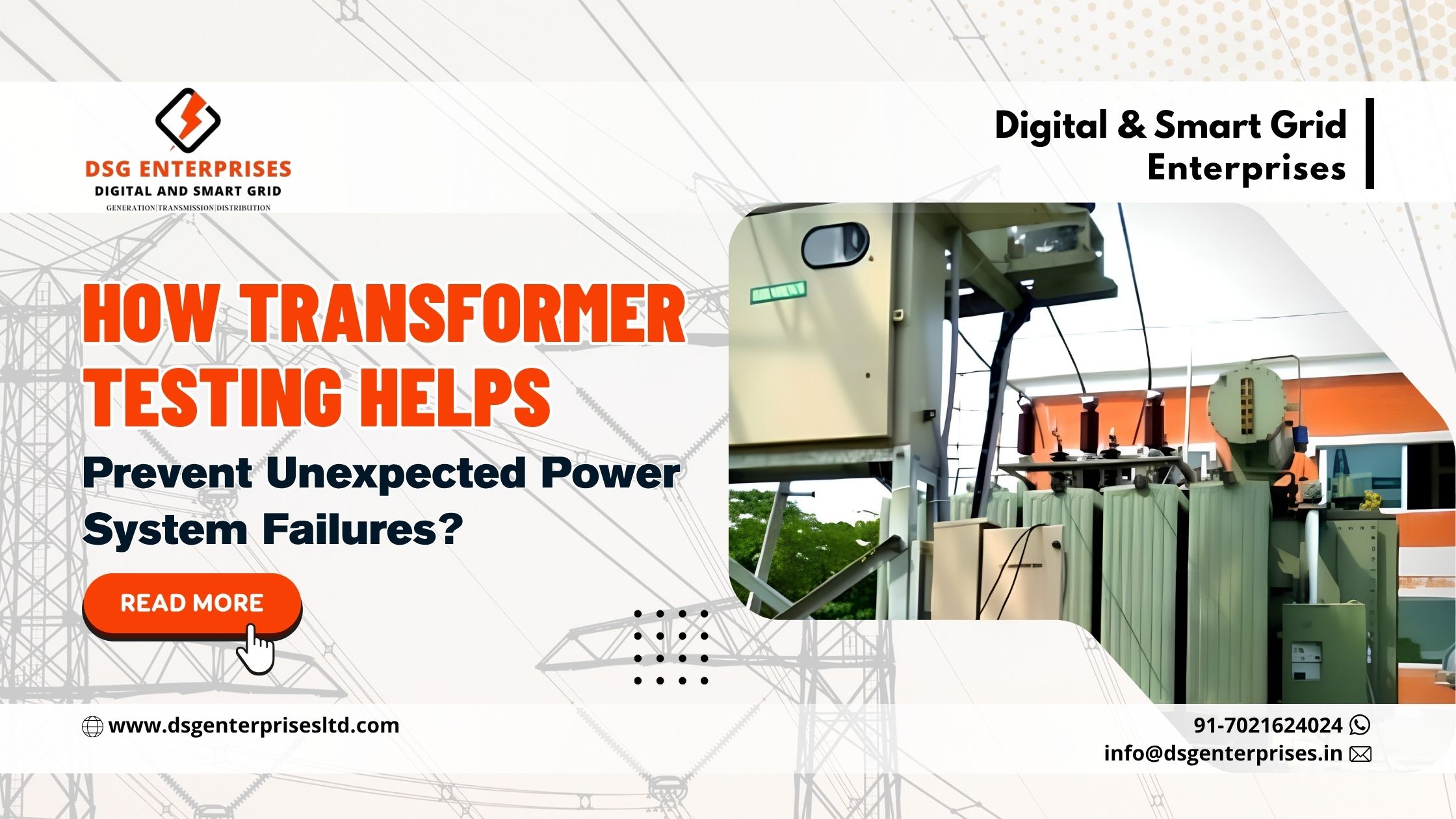
A transformer rarely fails without warning. Most of the time, small faults grow quietly inside the unit for months or even years. Then one day, the transformer trips, the plant stops, and everyone asks the same question: “Why didn’t we see this coming?”
Power Transformers Testing & Commissioning answers that question before it becomes a crisis. Regular checks find hidden problems early, so you can fix them on your schedule instead of during an emergency. This guide explains how transformer testing works, which tests matter most, and how you can protect your power system.
What Is Power Transformer Testing & Commissioning?
Power Transformer Testing & Commissioning is a set of electrical, mechanical, and oil-based checks that confirm a transformer is safe, healthy, and ready to run. Engineers perform these checks at three stages: at the factory, before energizing at the site, and during the transformer’s working life.
- Testing: Engineers measure the transformer’s electrical and insulation condition with special instruments.
- Commissioning: The team inspects, verifies, and energizes the transformer step by step at the site.
- Condition monitoring: Technicians repeat selected tests over time to track changes and spot trends.
Together, these steps give you a clear picture of your transformer’s health.
Why Do Transformers Fail Unexpectedly?
A transformer fails when its insulation, windings, core, or cooling system can no longer handle the stress placed on it. Several common causes lead to this point.
- Insulation aging: Heat, moisture, and time slowly break down the paper and oil inside the unit.
- Moisture entry: Water lowers the insulation strength and raises the risk of internal arcing.
- Overloading: Running the transformer above its rating creates extra heat and shortens its life.
- Loose connections: Poor joints create hot spots that damage nearby parts.
- Winding movement: Short-circuit forces can shift the windings and weaken their support.
- Poor installation: Mistakes during setup can cause faults that show up months later.
Most of these problems stay hidden from the naked eye. However, the right tests reveal them clearly.
How Transformer Testing Prevents Power System Failures
Testing works because it turns hidden risks into visible numbers. When you know the numbers, you can act early. Here is how testing protects your system.
- Early fault detection: Tests catch weak insulation, loose joints, and winding damage before they cause a trip.
- Lower repair costs: A small repair during planned downtime costs far less than a full replacement after a failure.
- Longer transformer life: Timely fixes keep the unit healthy and delay expensive replacement.
- Better safety: Healthy transformers reduce the risk of fire, oil leaks, and explosions.
- Reliable power supply: Fewer surprise outages mean steadier production and happier customers.
- Clear maintenance planning: Test records help you decide what to repair, when to repair it, and what to leave alone.
In short, testing replaces guesswork with facts.
Key Tests in Power Transformer Testing & Commissioning
Each test checks a different part of the transformer. Skilled engineers use a mix of them to build a full health report.
- Insulation resistance test: This test measures how well the insulation blocks current. A low reading often points to moisture or dirt.
- Winding resistance test: This test finds loose connections, broken strands, and poor contact in the tap changer.
- Transformer turns ratio (TTR) test: This test confirms the voltage ratio is correct and reveals shorted turns.
- Power factor (tan delta) test: This test shows the quality of the insulation and the condition of the bushings.
- Sweep frequency response analysis (SFRA): This test detects winding or core movement caused by transport shocks or short circuits.
- Dissolved gas analysis (DGA): Technicians test the oil for gases that signal overheating, arcing, or partial discharge.
- Oil quality tests: These tests check moisture, acidity, and breakdown voltage in the insulating oil.
- Excitation current test: This test finds core faults and winding problems.
- Partial discharge test: This test identifies tiny electrical sparks inside the insulation before they grow.
- Thermography: An infrared camera spots hot joints, blocked radiators, and cooling problems while the unit runs.
Engineers often follow guidance from standards such as IEC and IEEE when they run and judge these tests. As a result, the readings stay consistent and easy to compare.
The Commissioning Process, Step by Step
Commissioning is the final gate before your transformer enters service. A careful process gives you confidence on day one.
- Visual inspection: The team checks for transport damage, oil leaks, loose parts, and correct nameplate data.
- Pre-energization testing: Engineers run insulation, ratio, resistance, and SFRA tests to set a baseline.
- Oil and accessory checks: Technicians test the oil and verify the Buchholz relay, temperature gauges, and cooling fans.
- Protection system checks: The team confirms that relays and alarms trip at the correct settings.
- Energization: Engineers switch on the transformer slowly, first without load and then with load.
- Post-energization review: The team monitors temperature, noise, and gas levels, and then records the results.
This baseline data matters a great deal. Later, you can compare every new test result against it and see exactly what has changed.
Why You Should Choose Professional Power Transformers Testing Services
You can test a transformer with in-house staff. Still, expert Power Transformers Testing Services bring skills and tools that most plants do not keep on hand.
- Trained engineers: Specialists know how to read results and spot subtle warning signs.
- Calibrated equipment: Accurate instruments give you numbers you can trust.
- Safe work practices: Experienced teams follow strict safety rules around high-voltage equipment.
- Complete reports: You receive clear findings, trends, and repair advice, not just raw data.
- Faster turnaround: Skilled teams finish the work quickly and reduce your downtime.
- Unbiased advice: An outside expert gives you an honest view of your asset’s condition.
Moreover, a good service partner helps you build a long-term testing plan that fits your budget and risk level.
How Often Should You Test Your Transformer?
The right schedule depends on the transformer’s age, load, and environment. Even so, a simple plan works for most sites.
- New units: Test before energizing, and again after the first few weeks of service.
- Routine checks: Run oil tests once a year and electrical tests every two to three years.
- Older or heavily loaded units: Test more often, and consider online monitoring.
- After an event: Test right after a through-fault, lightning strike, or overload.
- After relocation or repair: Treat the unit like a new one and repeat the full test set.
Simple Tips to Get More Value from Testing
- Keep every record: Store all test data in one place, because trends tell the real story.
- Act on warnings quickly: A rising gas level or falling insulation value needs prompt attention.
- Test at the right time: Schedule work during planned outages to avoid extra downtime.
- Train your team: Staff who understand the results make better daily decisions.
Frequently Asked Questions
What is the main purpose of Power Transformers Testing & Commissioning?
The main purpose is to confirm that a transformer is safe, correctly installed, and ready for reliable operation. It also creates a baseline for future comparison.
How does transformer testing prevent failures?
Testing finds early signs of insulation damage, overheating, moisture, and winding faults. Engineers then fix these issues before they cause an outage.
Which test finds problems inside the oil?
Dissolved gas analysis (DGA) is the most common test. It detects gases that form when the transformer overheats or arcs.
Can testing be done while the transformer is running?
Yes, some tests can. Oil sampling, thermography, and online monitoring work on live units, while other electrical tests need a shutdown.
Conclusion
Transformers sit at the heart of every power system, so one failure can stop an entire operation. Fortunately, most failures give clues long before they happen. Power Transformers Testing & Commissioning helps you read those clues, fix small faults early, and keep your power flowing.
Do not wait for a breakdown to take action. Build a regular testing plan, keep clear records, and work with trusted Power Transformers Testing Services to protect your equipment. A little testing today saves a lot of trouble tomorrow. For pricing or inquiries, feel free to contact us at +91 7021624024 or email info@dsgenterprises.in. Our experienced technical team is here to guide you at every stage, from choosing the right product to ensuring reliable after-sales support. Click here to explore our complete range of products and learn more