
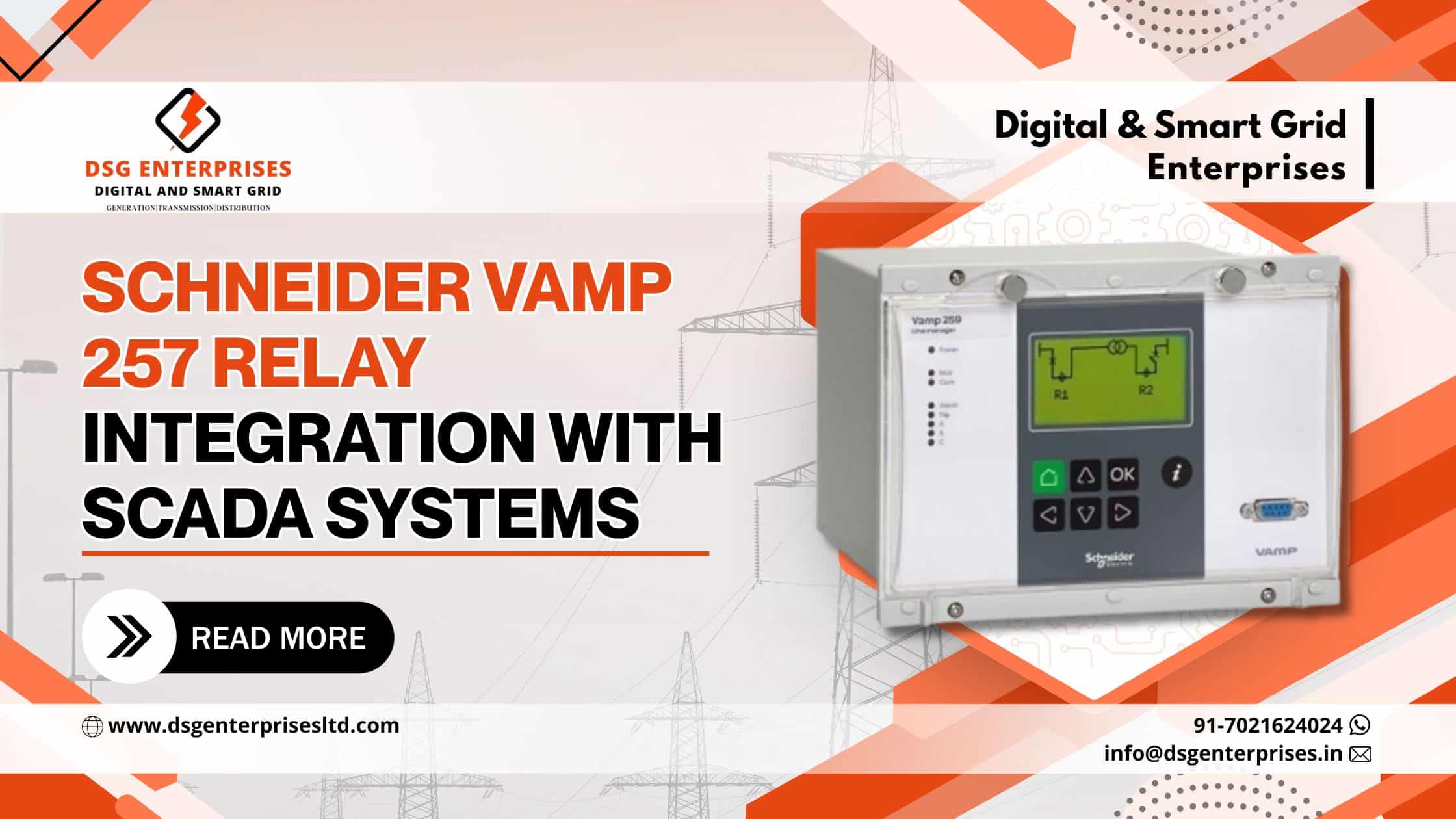
Power system protection remains critical for industries across the globe, especially in regions like India, North America, Europe, and Southeast Asia where reliable electrical infrastructure supports millions of operations daily. The Schneider VAMP 257 Relay has emerged as a trusted solution for protecting medium and high-voltage networks from electrical faults. This comprehensive guide explores how this powerful protection relay integrates seamlessly with SCADA systems to deliver superior monitoring and control capabilities.
Let me walk you through everything you need to know about implementing the Schneider VAMP 257 Relay in your facility.
What Is the Schneider VAMP 257 Relay?
The Schneider VAMP 257 Protection Relay represents advanced protection technology designed for three-phase circuits. This sophisticated device combines multiple protection functions into one compact unit, making it an ideal solution for industries that demand reliability and performance.
Think of the VAMP 257 as your electrical system’s intelligent guardian, it continuously monitors voltage, current, and frequency to detect problems before they become major issues.
Key characteristics include:
- Multi-function protection: The relay provides overcurrent protection, earth fault detection, and voltage monitoring in a single device
- Digital processing: Advanced microprocessor technology ensures accurate and rapid fault detection
- Communication capability: Built-in protocols enable seamless SCADA integration
- Compact design: Space-saving form factor suits various installation environments
- Cost-effective solution: Reduces overall protection system expenses compared to multiple single-function relays
Why SCADA Integration Matters for Modern Industries
SCADA stands for Supervisory Control and Data Acquisition. Essentially, it represents the nervous system of your power distribution network. Without proper integration, protection relays operate in isolation, limiting your visibility into system performance.
Moreover, SCADA integration transforms your Schneider VAMP 257 Relay from a simple protective device into an intelligent network component. This integration delivers real-time data, historical trending, and predictive insights that support better decision-making.
Benefits of SCADA integration include:
- Remote monitoring: Operators observe relay status from control centers without visiting substations
- Automated responses: SCADA systems trigger automatic corrective actions based on relay alerts
- Data logging: Historical fault records help identify recurring problems and plan maintenance
- Centralized control: Manage multiple relays across different locations from one dashboard
- Faster fault resolution: Operators respond quicker when they detect problems immediately
How Schneider VAMP 257 Relay Integrates with SCADA Systems
The integration process involves several technical layers that work together seamlessly. First, let’s understand the basic architecture:
Communication Protocol Setup
The Schneider VAMP 257 Protection Relay supports industry-standard communication protocols. These protocols act like a common language, allowing the relay to “speak” with SCADA systems fluently.
Supported protocols include:
- Modbus TCP: A widely used protocol in industrial automation that enables reliable data exchange
- DNP3: Commonly deployed in utility SCADA systems for secure, fast communication
- IEC 60870-5-104: European standard protocol preferred in many international installations
- Native Ethernet: Direct connection capability reduces additional hardware requirements
Schneider VAMP 257 Protection Relay Price Considerations
Understanding pricing helps organizations budget appropriately for protection system upgrades. The Schneider VAMP 257 Protection Relay price varies based on several factors that impact your investment decision.
Factors affecting pricing:
- Order quantity: Bulk purchases typically offer better unit costs
- Region of purchase: Local availability influences pricing in India, Europe, Middle East, and other markets
- Customization options: Additional features or specific configurations may increase costs
- Supplier relationship: Established partnerships often yield favorable pricing
- Warranty coverage: Extended protection plans affect the total cost
Generally, organizations invest in this relay because the long-term savings from reduced downtime and improved reliability exceed the initial purchase cost. The protection it provides prevents costly electrical failures that could damage equipment worth millions of rupees or dollars.
Additional costs to consider:
- Installation labor and professional commissioning services
- Network infrastructure upgrades for SCADA connectivity
- Software licenses for monitoring and diagnostics
- Training programs for maintenance and operations teams
- Spare parts inventory for predictive maintenance

Finding the Right Schneider VAMP 257 Protection Relay Supplier
Selecting a reliable Schneider VAMP 257 Protection Relay supplier significantly impacts your project success. A trustworthy supplier provides more than just equipment, they offer expertise, support, and assurance.
What to look for in a supplier:
- Authorized distribution: Verify they hold official Schneider Electric authorization
- Technical expertise: Suppliers should offer integration consultation and design support
- Local presence: Regional suppliers provide faster delivery and on-site support
- Comprehensive warranty: Reliable suppliers back their products with robust guarantees
- Training programs: Quality suppliers offer operator and technician training
- After-sales support: Technical helplines and field service ensure smooth operations
Real-World Applications and Benefits
Organizations across industries have successfully implemented Schneider VAMP 257 Relay integration with their SCADA systems. Real examples demonstrate the practical value this solution delivers:
Manufacturing Facilities:
- Reduced unplanned downtime by 40% through early fault detection
- Improved production efficiency by maintaining stable power supply
- Lower maintenance costs through predictive diagnostics
Utility Companies:
- Enhanced grid stability and reliability for customers
- Faster response to faults across distribution networks
- Better asset management and planning capabilities
Data Centers:
- Continuous power supply critical for server operations maintained reliably
- Automated failover systems triggered by relay protection events
- Reduced business losses from power interruptions
Renewable Energy Installations:
- Solar and wind farm protection optimized for variable generation
- Grid synchronization improved through precise relay coordination
- Performance monitoring drives operational efficiency gains
Implementation Best Practices
Successful integration requires following proven methodologies. These practices help avoid common pitfalls and ensure reliable operation:
Pre-installation:
- Conduct thorough system studies and analysis
- Create detailed project documentation
- Obtain all necessary permits and approvals
- Coordinate with utility companies where applicable
During installation:
- Follow manufacturer specifications precisely
- Document all configurations and settings
- Perform ongoing quality checks
- Maintain detailed installation records
Post-commissioning:
- Schedule regular maintenance inspections
- Keep backup copies of all configurations
- Monitor relay performance and logs continuously
- Conduct refresher training annually
Addressing Common Challenges
Organizations sometimes encounter obstacles during integration. Understanding these common challenges helps you prepare:
- Communication issues: Incompatible protocols require gateway devices or software adapters. Work with suppliers who understand your specific SCADA system version.
- Security concerns: Industrial networks demand robust protection. Implement firewalls, authentication systems, and encrypted communication channels.
- Scalability limitations: Growing operations may require expanding relay networks. Plan for modular expansion when selecting your initial system.
- Maintenance complexity: Multiple relay locations complicate management. Centralized SCADA systems solve this through unified monitoring dashboards.
Future Trends in Relay Technology
The evolution of power system protection continues advancing. Emerging technologies promise even better performance:
- Artificial intelligence: Machine learning algorithms will predict faults before they occur
- IoT integration: Direct cloud connectivity enables remote diagnostics and updates
- Cyber-physical systems: Enhanced coordination between protection relays and power flow optimization
- Renewable energy adaptation: Improved response to rapidly changing grid conditions
Conclusion
The Schneider VAMP 257 Relay represents a smart investment for organizations requiring reliable electrical protection combined with modern SCADA integration. This powerful combination delivers monitoring capabilities, rapid response times, and operational insights that drive efficiency and reliability.
Whether you operate in India, North America, Europe, or anywhere globally, implementing this protection solution protects your assets and ensures business continuity. Contact authorized Schneider VAMP 257 Protection Relay suppliers in your region to explore how this technology can enhance your power system reliability.
We, Digital and Smart Grid Enterprises, are the leading Schneider VAMP protection relay Suppliers, traders, distributors, and exporters in India. Schneider Electric offers a wide selection of protection relays. Vamp 50, VAMP 57 Series, Vamp 200 Series, Vamp 300 Series, VAMP Arc Protection. Schneider VAMP is an intelligent protection relay for low and medium-voltage power systems. For pricing or inquiries, feel free to contact us at +91 7021624024 or email info@dsgenterprises.in. Our experienced technical team is here to guide you at every stage, from choosing the right product to ensuring reliable after-sales support. Click here to explore our complete range of products and learn more